 Axolotl Den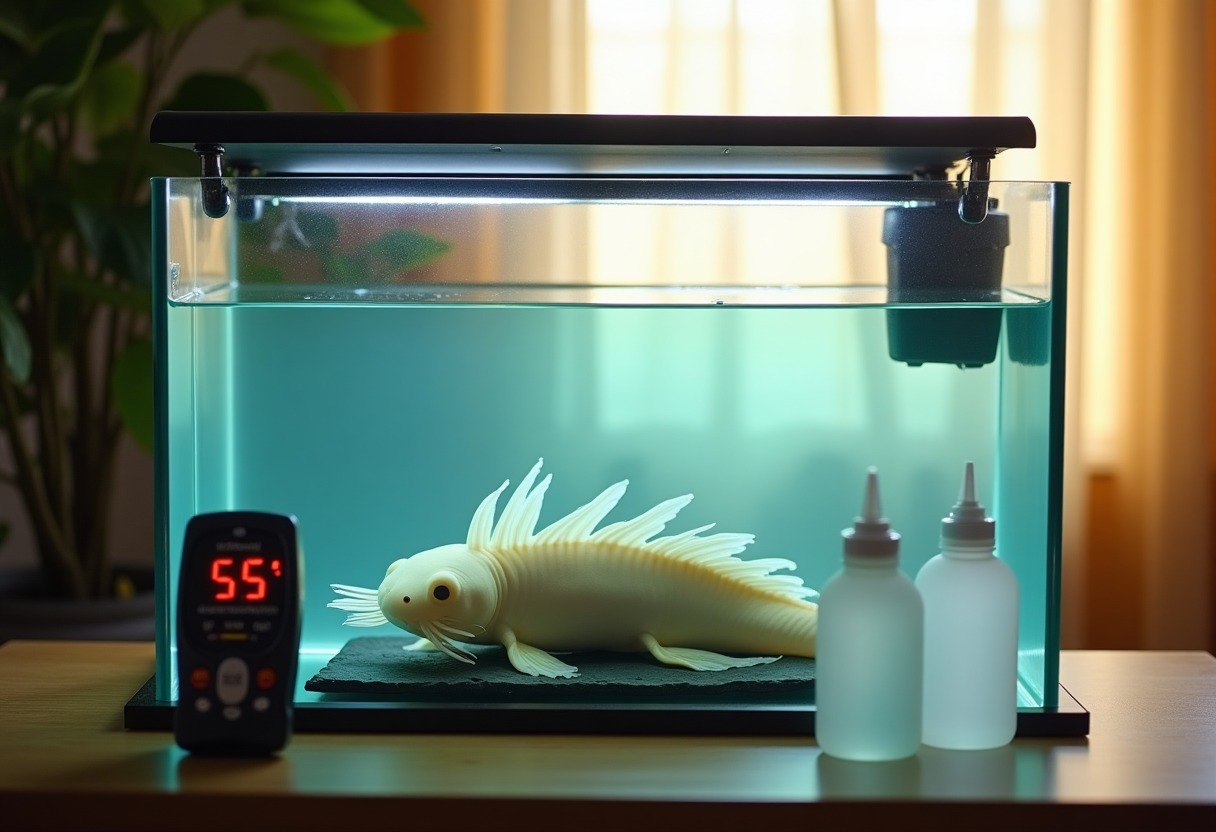
Your axolotl can die in water that hits 75°F for more than a few hours. Summer heat isn't just uncomfortable for these cold-water amphibians — temperatures above 68°F stress their metabolism, suppress their immune system, and create conditions where harmful bacteria thrive. If you're facing a summer where ambient temps climb into the 80s but can't justify a $300+ aquarium chiller, you need reliable cooling methods that actually work.
Why Axolotls Can't Handle Summer Heat
Axolotls evolved in the cold mountain lakes of Mexico, where water temperatures stay between 60-64°F year-round. Their bodies function optimally between 60-68°F, and anything above that range triggers physiological stress. At 70°F, their metabolism speeds up but their gills can't extract enough oxygen from warmer water — which holds less dissolved oxygen than cold water. By 74°F, you're risking fungal infections and bacterial blooms. At 77°F and above, organ damage begins.
Heat stress shows up before your thermometer hits the danger zone. Watch for these signs: rapid gill movement, floating at the surface gulping air, refusing food (covered in detail in our Axolotl Stopped Eating guide), or pale, stressed coloring across morphs you can identify through our Axolotl Colors And Morphs post. By the time you see these symptoms, you're already behind. Prevention means keeping daily temperature spikes under control before they compound.
The good news: multiple cooling methods work without chillers if you layer them strategically and monitor consistently.
Aquarium Cooling Fans: Your First Line of Defense
Evaporative cooling through fans drops tank temperature 2-4°F reliably. The physics are simple — moving air across the water surface accelerates evaporation, which pulls heat from the water. A single clip-on fan aimed at your tank surface runs about 15 watts and costs $15-25, making it the most cost-effective cooling method per degree dropped.
Position matters more than fan power. → Shop clip-on desk fans on Amazon and mount them 6-8 inches above the water surface, angled to create ripples without causing excessive current that stresses your axolotl. Run the fan continuously during hot months — the electricity cost is negligible compared to the cooling benefit. Two smaller fans positioned at opposite ends of the tank work better than one large fan because they distribute cooling more evenly.
The trade-off: evaporation. Expect to replace 1-2 gallons per week in a 20-gallon tank, more in larger setups. Use dechlorinated water at tank temperature when topping off to avoid shocking your axolotl. Keep a → Shop digital aquarium thermometers on Amazon in the tank to verify the cooling effect — cheap analog thermometers often read 2-3°F off, which defeats the purpose of precise temperature management detailed in our Axolotl Temperature Requirements Chillers guide.
Pair fans with an open tank top or screen lid. Glass canopies trap heat and humidity, negating evaporative cooling. If you're concerned about jumpers or evaporation mess, a mesh screen allows airflow while containing splashes.
Frozen Bottle Rotation Method
Frozen water bottles provide emergency cooling and supplement fan systems during heat waves. A 1-liter frozen bottle floated in a 20-gallon tank drops temperature 3-5°F over 2-3 hours. The method requires planning but costs almost nothing beyond freezer space.
Here's the rotation system that works: keep 4-6 bottles frozen at all times. When tank temperature climbs above 66°F, float one bottle in a mesh bag or wrapped in a thin cloth to prevent direct axolotl contact with the freezing-cold plastic. Replace it every 2-3 hours as it thaws. Never dump ice directly into the tank — rapid temperature swings shock axolotls as badly as sustained heat. Gradual cooling over 30-60 minutes is safer than a 5°F drop in 10 minutes.
The bottle method works best for:
- Emergency cooling during unexpected heat waves
- Supplementing fans when ambient temperature exceeds 85°F
- Overnight cooling when you're present to monitor and rotate
- Temporary solutions while budgeting for a chiller
The bottle method doesn't work well for:
- All-day cooling when you're at work (bottles thaw in 2-3 hours)
- Hands-off temperature management
- Precise temperature control within 1-2°F
→ Shop insulated foam board on Amazon to wrap around three sides of your tank if using frozen bottles regularly — the insulation helps the cooling effect last longer and prevents ambient room heat from counteracting your efforts.
Cooling Comparison: Methods Ranked by Effectiveness
| Method | Temp Drop | Daily Cost | Setup Difficulty | Monitoring Required | |--------|-----------|------------|------------------|---------------------| | Aquarium cooling fans | 2-4°F | $0.10-0.15 | Easy — clip and plug in | Low — check weekly | | Frozen water bottles | 3-5°F per bottle | $0 | Moderate — requires rotation schedule | High — every 2-3 hours | | Room AC set to 68-70°F | 5-10°F | $2-5 | Easy if AC exists | Low — thermostat controlled | | Tank relocation to basement | 8-12°F | $0 | Hard — requires moving entire setup | Low once relocated |
Room air conditioning beats all other methods when available, but most keepers can't justify running central AC at 68°F all summer just for an axolotl tank. Window units in the tank room work if you're home regularly or can run them on timers during peak heat hours. A 5,000 BTU window unit costs about $150-200 and pulls roughly $0.50-1.00 daily if run 8-10 hours on warm days.
Basement relocation makes sense for long-term summer management if your home has one. Basements naturally stay 60-68°F year-round in most climates. The challenge is moving a fully-cycled tank (see Cycling Your Axolotl Tank for why you can't rush this) without crashing your beneficial bacteria colony. If relocating, move substrate, filter media, and half the tank water to preserve your cycle. Transport your axolotl separately using methods from our Safe Axolotl Handling Transport Moving Vet Visits guide.
Strategic Tank Placement and Room Management
Where you place the tank determines how hard you'll fight against heat. Every 5°F of ambient room temperature reduction translates to easier temperature management and less reliance on active cooling methods.
Move tanks away from:
- Windows receiving direct sunlight (adds 10-15°F of heat load)
- Heat-generating appliances and electronics
- Upper floors where heat rises
- Rooms with poor airflow
Position tanks near:
- Interior walls that stay cool
- Basement access or naturally cool rooms
- Areas with good cross-ventilation
- Spots where you can easily run a dedicated fan
Light management matters more than most keepers realize. Tank lights generate significant heat — even LED fixtures add 2-3°F over 8-10 hours of operation. Our Axolotl Tank Lighting Guide covers this thoroughly, but the summer-specific advice is simple: if your tank has live plants that need light, run it during cooler morning hours only. If you're running decorations without live plants (options explored in Best Axolotl Tank Decorations Safe), skip the light entirely. Axolotls are nocturnal and prefer dim conditions regardless of season.
Room darkening during peak heat hours helps. Close blinds and curtains between 11 AM and 4 PM. If the tank room has poor airflow, add a ceiling fan or box fan for air circulation — not aimed at the tank, but moving room air to prevent heat pockets from forming.
One underutilized trick: run your filter at night when ambient temps drop. Filters generate heat through motor operation. If temperatures are manageable overnight but spike during the day, reduce or turn off filtration during peak heat and compensate with stronger nighttime flow. This works best with oversized filters that can handle intermittent operation without compromising water quality outlined in Axolotl Water Parameters Complete Guide.
Product Recommendations for Budget Summer Cooling
Clip-On Fans: → Shop aquarium cooling fans on Amazon. Purpose-built aquarium fans attach directly to tank rims and come with adjustable angles. They cost $20-35 and move enough air for 20-40 gallon tanks. Generic desk fans work fine too — prioritize airflow (CFM rating) over aesthetics.
Digital Thermometers: → Shop digital aquarium thermometers on Amazon. Get one with a probe that stays submerged and a digital display you can read from across the room. Models with high/low temperature alarms ($15-25) save axolotls during heat spikes when you're not actively watching.
Frozen Water Bottles: Standard 1-liter or 2-liter bottles work perfectly. → Shop frozen water bottles pets on Amazon if you want purpose-made gel packs, but they offer no real advantage over free bottles you already have. Keep 6-8 in rotation.
Insulation Materials: Foam board insulation panels ($10-20 for a 4x8 sheet) cut to size and positioned against the back and sides of your tank reduce heat transfer from warm room air. This is especially useful if your tank sits against an exterior wall that gets hot in direct sun.
Room Cooling: If AC isn't an option, a portable evaporative cooler for the tank room runs $50-150 and drops ambient temperature 10-15°F in rooms up to 300 square feet. These work best in dry climates and use much less electricity than traditional AC units.
What Most Keepers Miss About Summer Heat Management
Temperature stability matters more than hitting a perfect number. An axolotl that experiences 64°F to 68°F daily fluctuations handles summer better than one bouncing between 60°F and 72°F. Rapid swings stress them as much as sustained heat because their metabolism can't adjust quickly.
Monitor at multiple times daily — not just when you feed. Set phone alarms for peak heat hours (typically 2-4 PM) and check again before bed. Temperature patterns reveal whether your cooling strategy works or needs adjustment. If you're hitting 69°F at 3 PM every day despite fans running, you need additional cooling, not just more fan time.
Water changes during summer require extra attention. If your tap water comes out at 75°F in July, you can't do a 25% water change without spiking tank temperature dangerously. Either: (1) Pre-chill replacement water with frozen bottles to 65°F before adding, or (2) do smaller, more frequent changes (10% every 3-4 days instead of 25% weekly) to minimize temperature impact per change. Our Axolotl Tank Maintenance Schedule adapts well to this modified approach.
Heat stress compounds other problems. Warmer water accelerates ammonia and nitrite toxicity, reduces dissolved oxygen, and promotes algae growth. If your tank parameters drift during summer, temperature is likely the upstream cause. Keep testing frequency high — weekly minimum, daily if temperatures exceed 68°F regularly. Methods covered in Axolotl Water Testing Kits become non-negotiable during heat stress periods.
Consider a backup plan for extreme heat. If your area experiences multi-day heat waves where indoor temps hit 90°F+, identify a friend with AC or a climate-controlled space where you can temporarily relocate your axolotl in a container with an air stone. It's not ideal, but a 3-day stay in a cooler environment beats heat stroke. Similar protocols apply to power outages covered in Axolotl Tank Power Backup.
FAQ
How quickly can I cool an overheated axolotl tank? Drop temperature gradually at no more than 2°F per hour to avoid shocking your axolotl. Use multiple frozen bottles rotated frequently plus fans for controlled cooling. Going from 74°F to 65°F should take 4-5 hours minimum.
Can I use ice cubes directly in the tank for emergency cooling? Never add ice directly to the tank — the localized cold spot and rapid temperature swing cause more stress than gradual cooling with frozen bottles. Ice also dilutes water chemistry if you're using tap water to make it.
Will a ceiling fan in the room help cool my axolotl tank? Ceiling fans improve overall room air circulation, which helps, but they don't provide direct evaporative cooling like a fan aimed at the water surface. Use both if room temperature regularly exceeds 75°F.
At what temperature should I stop feeding my axolotl in summer? Stop feeding when tank temperature exceeds 70°F for more than 6 hours daily. Higher temps slow digestion and increase ammonia from uneaten food. Resume normal feeding schedules from Axolotl Feeding Guide once temps stabilize below 68°F.
How much evaporation is normal when running cooling fans continuously? Expect 1-2 gallons weekly in a 20-gallon tank, more in larger setups or drier climates. Mark your tank with a waterline indicator and top off with dechlorinated, temperature-matched water every 2-3 days to maintain stable water levels and prevent parameter drift from Axolotl Nitrate Control.
Keep Your Axolotl Safe Through Every Summer
Layering multiple cooling methods — fans for baseline cooling, frozen bottles for heat spikes, strategic placement to minimize heat gain — keeps most axolotls comfortable through summer without the expense of a dedicated chiller.
Some links on this page are affiliate links. We may earn a small commission if you purchase through them, at no extra cost to you.
As an Amazon Associate we earn from qualifying purchases. This article contains affiliate links; if you buy through them we may earn a small commission at no additional cost to you.