 Axolotl Den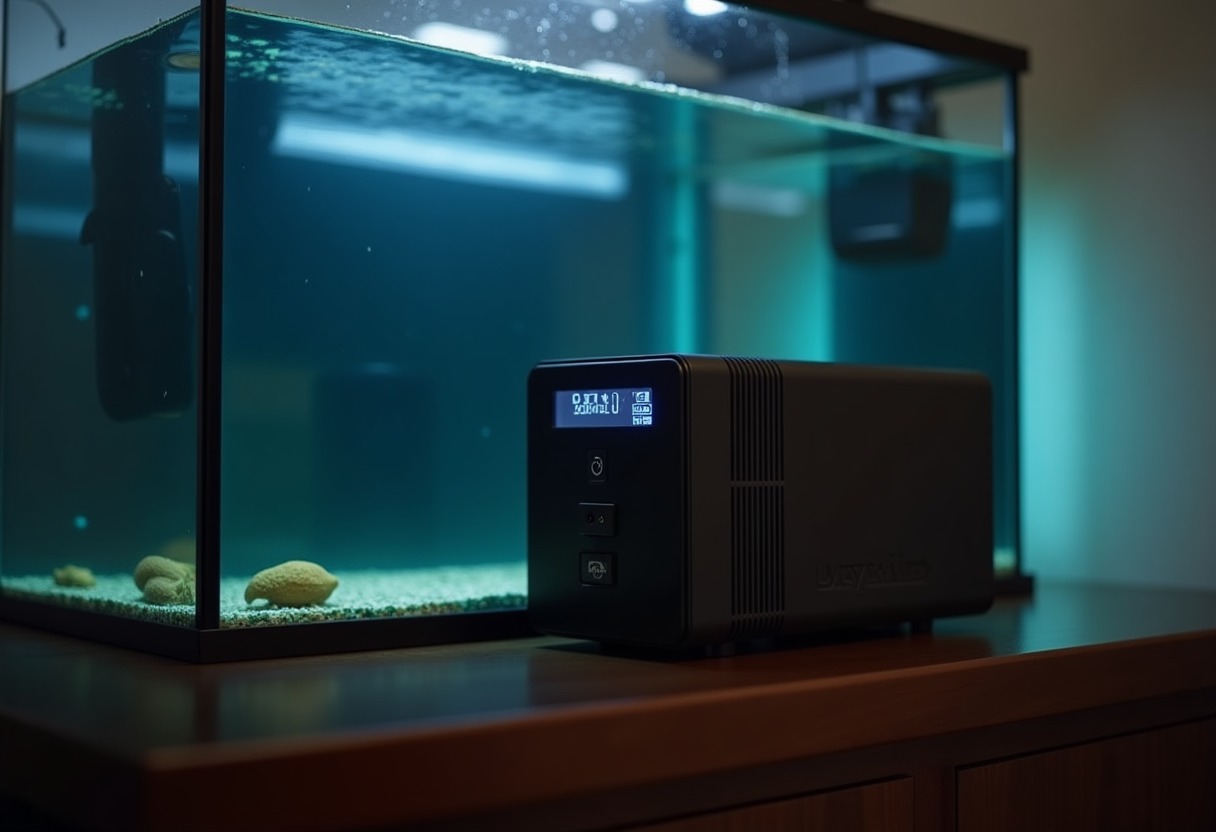
Your chiller shuts down at 2 AM during a summer storm, and by morning, your tank water hits 72°F—dangerously close to stress territory for your axolotl. Power outages happen without warning, and axolotls are particularly vulnerable because they need consistent water temperatures between 60-64°F and continuous filtration to prevent ammonia buildup.
Why Axolotl Tanks Need Dedicated Power Backup
Standard aquarium equipment draws varying power loads. Your filter typically pulls 5-15 watts, your chiller can demand 100-200 watts, and an air pump runs on 3-5 watts. During an outage, the biggest threats aren't immediate—axolotls can survive several hours without active filtration—but temperature spikes and oxygen depletion become critical within 4-6 hours depending on tank size and ambient temperature.
The real danger comes from extended outages during warm weather. Without your chiller running, tank temperatures can climb 1-2°F per hour in a 75°F room. Since proper temperature control is non-negotiable for axolotl health, backup power for cooling equipment should be your first priority.
Most keepers discover they need backup power after their first scare. Summer thunderstorms, rolling blackouts, and winter ice storms can knock out power for 12-48 hours in many regions. Even a 4-hour outage during July can push your tank into dangerous territory.
Battery Backup vs. UPS Systems: What Actually Works
Battery backups and uninterruptible power supply (UPS) systems serve different purposes for tank equipment. A UPS provides instant switchover for sensitive electronics and runs on sealed lead-acid batteries with limited capacity. Most consumer UPS units deliver 300-1500VA (volt-amperes), translating to 1-8 hours of runtime depending on connected load.
For axolotl tanks, a quality UPS makes sense for filters and air pumps but falls short for chillers. → Shop aquarium battery backup systems on Amazon. A 600VA UPS can power a 10-watt filter and 5-watt air pump for roughly 6-8 hours—enough to bridge most short outages.
Portable power stations offer higher capacity at the cost of manual switching. These lithium-ion units range from 200Wh to 2000Wh+ and can run chillers for extended periods. A 500Wh power station running a 150-watt chiller provides about 2.5-3 hours of cooling, while a 1000Wh unit doubles that runtime to 5-6 hours.
DC-powered backup systems represent the most efficient option for air pumps specifically. Battery-operated air pumps designed for aquarium use run on D-cell batteries and deliver 8-12 hours of aeration per battery set. These units automatically activate when mains power fails, making them true set-and-forget solutions for maintaining dissolved oxygen.
Calculating Your Actual Power Requirements
Before spending money on backup equipment, measure what your tank actually draws. Most smartphone-connected watt meters cost $15-25 and plug between your equipment and the outlet, showing real-time consumption.
Your filter's stated wattage reflects maximum draw at startup, but running consumption typically measures 60-75% of that rating. A filter rated for 15 watts often pulls 9-11 watts during normal operation. Chillers cycle on and off, so their average consumption depends on ambient temperature and how often they run—usually 30-50% of rated capacity in a climate-controlled room.
Here's what typical axolotl tank equipment actually draws:
| Equipment Type | Rated Power | Actual Draw | Backup Priority | |---------------|-------------|-------------|-----------------| | Canister filter | 10-20W | 6-15W | High | | Chiller (1/10 HP) | 100-180W | 50-120W avg | Critical (summer) | | Air pump | 3-8W | 2-5W | Medium | | LED light | 10-30W | 10-30W | Low |
Add 20% to your total calculated load when sizing backup power. If your filter draws 12 watts and your air pump pulls 4 watts, size your backup for 20 watts minimum (16W × 1.2 = 19.2W).
Recommended Backup Power Solutions by Budget
For under $100, focus on protecting filtration and aeration rather than trying to power everything. A → DC air pump with battery backup costs $25-45 and automatically maintains oxygen levels when power fails. Pair this with a basic 600VA UPS ($60-80) to keep your filter running for 6-8 hours.
Mid-range setups ($150-300) can include a → portable power station for aquariums in the 300-500Wh range. These units power filters indefinitely during short outages and can run a chiller for 2-4 hours if needed. Look for models with pure sine wave output—cheaper modified sine wave units can damage chiller compressors over time.
Premium systems ($400-700) combine a 1000Wh+ power station with a dedicated UPS for instant switchover. This setup handles full tank loads including chillers for 4-8 hours, enough to ride out most residential outages. If you're serious about backup power and live in an outage-prone area, this investment makes sense alongside the quality tank setup you've already built.
For keepers in regions with frequent extended outages, a small gas generator (2000W) costs $400-600 and runs a full tank setup for days on a few gallons of fuel. You'll need a quality extension cord rated for outdoor use and should run the generator outside—never in a garage or enclosed space.
Emergency Protocols When Backup Power Runs Out
Even with backup systems, you need a plan for worst-case scenarios. When power fails and your backup is depleted, your priority shifts to temperature control and oxygen maintenance through manual methods.
Battery-powered air stones remain your best friend during extended outages. → Shop battery powered aquarium pumps on Amazon. Keep spare D-batteries stored specifically for this purpose—check them every six months and replace any that measure below 1.3V on a multimeter.
For temperature management without a chiller, frozen water bottles become your emergency cooling system. Freeze 3-4 plastic bottles (16-20 oz each) in advance and rotate them into the tank inside a mesh bag or container that prevents direct contact with your axolotl. Each bottle drops tank temperature by 2-4°F over 2-3 hours. Never add loose ice directly to tank water—the rapid temperature swings cause more stress than gradual warming.
If your tank temperature climbs above 68°F, reduce feeding immediately. Axolotls at elevated temperatures have increased metabolic rates but decreased oxygen absorption capacity. Following your normal feeding schedule during warm periods creates additional ammonia stress your compromised biological filter can't handle.
Monitor your axolotl's behavior closely during outages. Gill fluttering, surface gasping, or floating indicates oxygen depletion requiring immediate action. Manually aerate the water by pouring it from a height back into the tank—this entrains oxygen and can buy you time until power returns or battery backup recharges.
Testing and Maintaining Your Backup System
Your backup power solution needs regular testing to work when you actually need it. Monthly testing catches failing batteries, corroded connections, and undersized systems before an emergency exposes the gaps.
Simulate an outage by unplugging your tank equipment and confirming your backup system activates and maintains power. Time how long your UPS or power station runs your actual connected load—not the manufacturer's theoretical runtime with a different load profile.
UPS batteries degrade 15-20% per year whether you use them or not. Most consumer UPS units need battery replacement every 3-4 years, costing $30-80 depending on capacity. Mark your purchase date on the unit with a permanent marker and set a calendar reminder for replacement.
Power station lithium batteries maintain capacity better but still degrade with charge cycles. Keep your power station between 40-80% charge when stored for maximum longevity—full charges or complete depletion accelerate degradation. Cycle the unit fully every 3-4 months by running it to 10% and recharging to 100%, which recalibrates the battery management system.
Keep a written log of your outage experiences. Note the duration, equipment that failed, how long your backup lasted, and what you'd do differently. This practical knowledge beats any amount of theoretical planning when the next outage hits.
Store backup batteries in a cool, dry location away from direct sunlight. Heat accelerates self-discharge in all battery chemistries. D-cell batteries stored at 70°F retain 90% capacity for 5-7 years; the same batteries stored at 85°F lose 50% capacity in 2-3 years.
FAQ
How long can an axolotl survive without a filter running? Axolotls can tolerate 4-6 hours without filtration in an established tank with stable water parameters. Beyond 8 hours, ammonia and nitrite levels start climbing, especially if you fed recently. Larger tanks with mature biological filtration and lower stocking density handle longer periods better than newer or heavily stocked tanks.
Will a UPS designed for computers work for aquarium equipment? Standard computer UPS units work fine for filters and air pumps but verify they output pure sine wave power before connecting a chiller. Modified sine wave UPS units cost less but can damage compressor motors over time. Check the UPS specifications—pure sine wave models clearly advertise this feature.
What's the minimum backup power needed for a 20-gallon axolotl tank? A 20-gallon tank needs roughly 15-20 watts for filter and air pump backup. A 350-600VA UPS ($50-75) provides 4-8 hours of runtime for this load. If you need chiller backup too, step up to a 500Wh portable power station that can run the entire system for 2-4 hours depending on chiller cycling.
Do backup power systems need special installation? Most aquarium backup power requires no special installation—plug the UPS or power station into your wall outlet, then plug your tank equipment into the backup unit. Position the backup device off the floor on a shelf or stand to protect it from water damage if a leak occurs. Keep connections accessible for monthly testing.
Should I backup my aquarium light during power outages? Lights are your lowest priority for backup power since axolotls tolerate darkness better than most fish. If your backup system has excess capacity after covering filter, chiller, and air pump needs, you can include lighting. Otherwise, skip it and allocate those watts to critical life-support equipment.
Protect What Matters Most
Your backup power system represents insurance for the living creature depending on your tank maintenance and preparation—size it appropriately, test it regularly, and know exactly what to do when the lights go out.
Some links on this page are affiliate links. We may earn a small commission if you purchase through them, at no extra cost to you.
As an Amazon Associate we earn from qualifying purchases. This article contains affiliate links; if you buy through them we may earn a small commission at no additional cost to you.