 Axolotl Den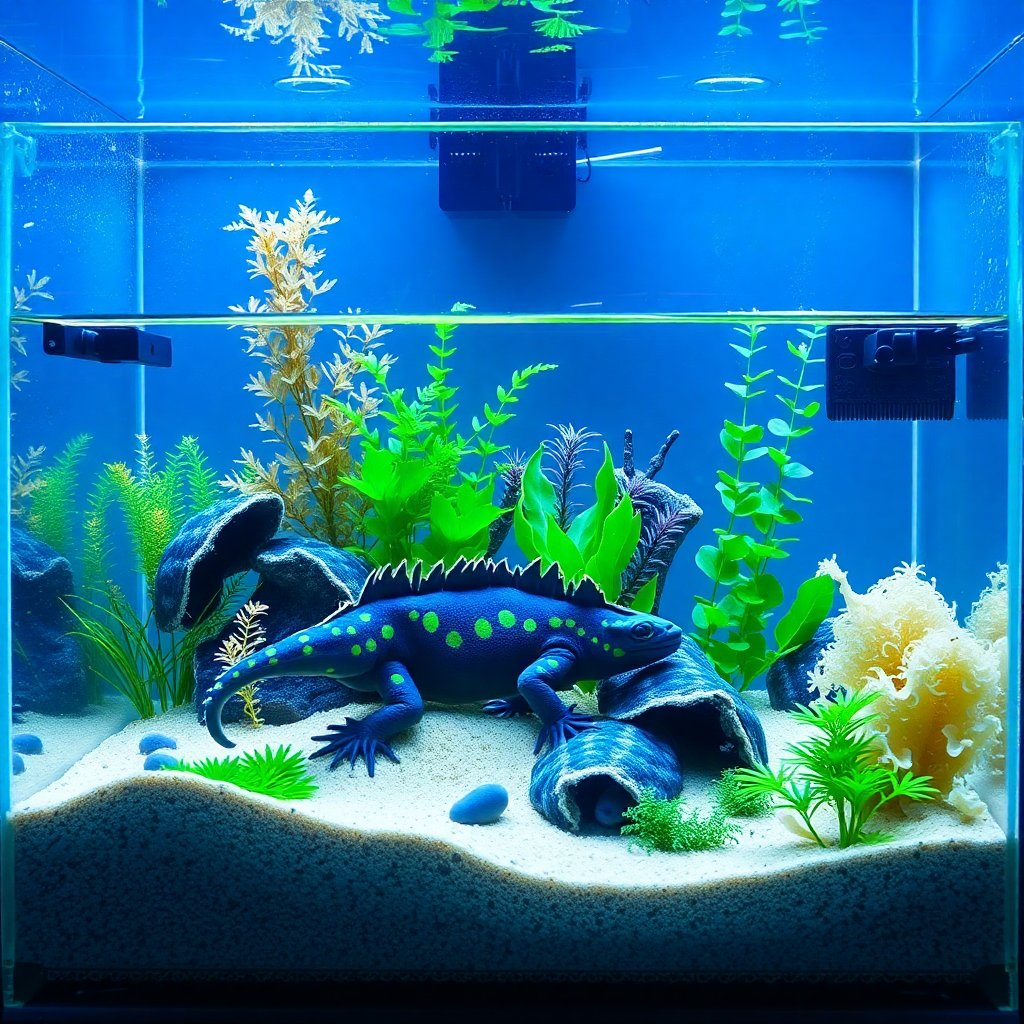
Axolotls are stunning, personable, and surprisingly hardy — but they have specific care requirements that are easy to get wrong if you set up their tank without understanding what they actually need. The good news: once your tank is correctly established, axolotl keeping is genuinely low-maintenance.
This guide walks through everything you need to set up an axolotl tank correctly the first time.
The Core Rule: Cold, Clean, Cycled
Before anything else, understand that axolotl care comes down to three fundamentals:
- Cold water (60–68°F / 16–20°C ideal; never above 72°F)
- Clean water (well-filtered, low ammonia and nitrites, low nitrates)
- Cycled tank (established nitrogen cycle before any axolotl goes in)
Most beginner problems — lethargy, gill damage, stress, disease — trace back to one of these three factors being off. Get them right and you've done most of the work.
Tank Size
A single adult axolotl needs a minimum of 20 gallons of water. Many experienced keepers recommend 40 gallons for adults, as the larger water volume is more forgiving on water quality and temperature stability.
For two axolotls, 40 gallons is the practical minimum — and only keep same-size animals together, as axolotls will bite limbs off tankmates they can fit in their mouth.
Long tanks are better than tall ones. Axolotls are bottom-dwellers and don't use vertical space. A 40-gallon "breeder" style tank (wider footprint) is preferable to a tall 40-gallon.
→ Shop aquarium tanks on Amazon
Filtration
Axolotls produce significant waste for their size, so filtration is important — but they're sensitive to strong water flow, which stresses them and can cause them to float.
The best filter setup for axolotls:
Canister filters are the top choice for most keepers. They move high volumes of water, house good amounts of biological media, and can be positioned to return water gently along the tank wall rather than creating a direct current.
Sponge filters are a budget-friendly option that many keepers use, particularly for smaller tanks or as secondary filtration. The gentle output is axolotl-friendly.
HOB (hang-on-back) filters work but typically need their output diffused — a spray bar, a sponge over the outlet, or angling the return to hit the glass rather than the water surface directly.
→ Shop aquarium canister filters on Amazon
Filter tip: Oversize your filtration. Rated for a 50-gallon tank? Use it on your 40. The extra capacity gives you more margin for water quality and means you can skip a filter cleaning without immediate consequences.
The Nitrogen Cycle
Never put an axolotl in an uncycled tank. This is the most common beginner mistake and it causes real suffering. Our dedicated guide on cycling your axolotl tank walks through the process step by step, including how to speed it up safely.
The nitrogen cycle establishes colonies of beneficial bacteria that convert toxic ammonia (from waste) into nitrites, then into much less harmful nitrates. An uncycled tank spikes ammonia fast enough to burn gills and kill animals.
Cycling takes 4–8 weeks with fish-in cycling methods, or can be accelerated with bottled bacteria products. You'll know your tank is cycled when:
- Ammonia reads 0 ppm
- Nitrite reads 0 ppm
- Nitrate is present (shows the cycle is working)
Test your water with a liquid test kit — strips are notoriously inaccurate for axolotl keeping.
Temperature Control
This is where many new axolotl keepers underestimate the challenge. Most homes are kept warmer than 68°F, especially in summer. Options for keeping the tank cool:
- Aquarium chiller — the permanent, reliable solution; expensive but worth it in warm climates
- Desk fan blowing across the water surface — evaporative cooling, works in mild climates
- Frozen water bottles — temporary solution only; creates temperature swings if not done carefully
- Basement placement — basements often stay naturally cool enough
→ Shop aquarium chillers on Amazon
If your home routinely gets above 75°F in summer without air conditioning, a chiller is not optional — it's necessary equipment.
Substrate
Two options work well for axolotls:
No substrate (bare bottom): Easiest to clean, no ingestion risk, shows waste clearly. Many keepers prefer this despite the aesthetics.
Fine sand: Axolotls can safely ingest fine sand, which passes through their digestive system. Use pool filter sand or specifically aquarium-safe fine sand. Avoid anything coarse or with sharp edges.
Never use gravel. Axolotls gulp their food and will ingest gravel, which can cause intestinal impaction and death.
Décor and Hides
Axolotls need places to hide — they're naturally found under rocks and in dark areas. Caves and hides reduce stress significantly.
Good options: PVC pipe sections, terracotta pots, aquarium caves, smooth rocks arranged into overhangs. Avoid anything with sharp edges or openings an axolotl could get stuck in. For a detailed guide to the best hides and what makes each type work, see our best hides for axolotls post.
Live plants are beneficial for water quality but must be cold-water tolerant. Java ferns, anubias, and java moss do well in axolotl temperatures.
Quick Setup Checklist
- [ ] Tank (20 gal minimum, 40 gal recommended)
- [ ] Filter (canister preferred, oversized)
- [ ] Liquid test kit
- [ ] Thermometer
- [ ] Temperature control solution (fan at minimum, chiller for warm climates)
- [ ] Substrate (sand or bare bottom)
- [ ] Hides (at least 2 per axolotl)
- [ ] Dechlorinator
- [ ] Cycled tank before adding axolotl
Get these elements right and you'll have a healthy, thriving axolotl for the 10–15 years they typically live in good care. The setup investment pays off in an animal that's genuinely fascinating to keep.
Frequently Asked Questions
What size tank do I need for one axolotl?
A single adult axolotl needs a minimum of 20 gallons, but 40 gallons is the practical recommendation. The larger water volume makes temperature and water quality much more stable — both of which directly impact axolotl health. Always choose a long, wide tank (like a 40-gallon breeder style) over a tall one, since axolotls live on the bottom.
Do axolotls need a heater in their tank?
No — axolotls actually need the opposite. They thrive in water between 60–68°F and can become stressed or ill in warmer temperatures. If your home stays above 72°F in summer, you'll need a cooling solution: an aquarium chiller, a fan blowing across the water surface, or basement placement. A heater is never appropriate for an axolotl tank.
How long does it take to cycle an axolotl tank?
A new tank typically takes 4–8 weeks to fully cycle using fishless cycling methods or bottled bacteria products. The tank is cycled when you consistently read 0 ppm ammonia, 0 ppm nitrite, and detectable nitrates. Never add an axolotl to an uncycled tank — ammonia spikes are the leading cause of gill damage and death in new setups.
Can axolotls live together in the same tank?
Axolotls can be housed together, but only with same-sized animals. Axolotls will bite and swallow limbs of smaller tankmates — they're not being aggressive, they're just responding to movement near their mouth. Two adults of similar size in a 40-gallon tank is a workable setup; never mix adults with juveniles.
What substrate is safe for an axolotl tank?
Fine sand (like pool filter sand) or a bare-bottom tank are the only safe options. Never use gravel — axolotls gulp their food and will ingest gravel, which can cause deadly intestinal impaction. Bare-bottom tanks are easiest to clean; fine sand allows more natural behavior and looks better aesthetically.
As an Amazon Associate we earn from qualifying purchases. This article contains affiliate links; if you buy through them we may earn a small commission at no additional cost to you.