 Axolotl Den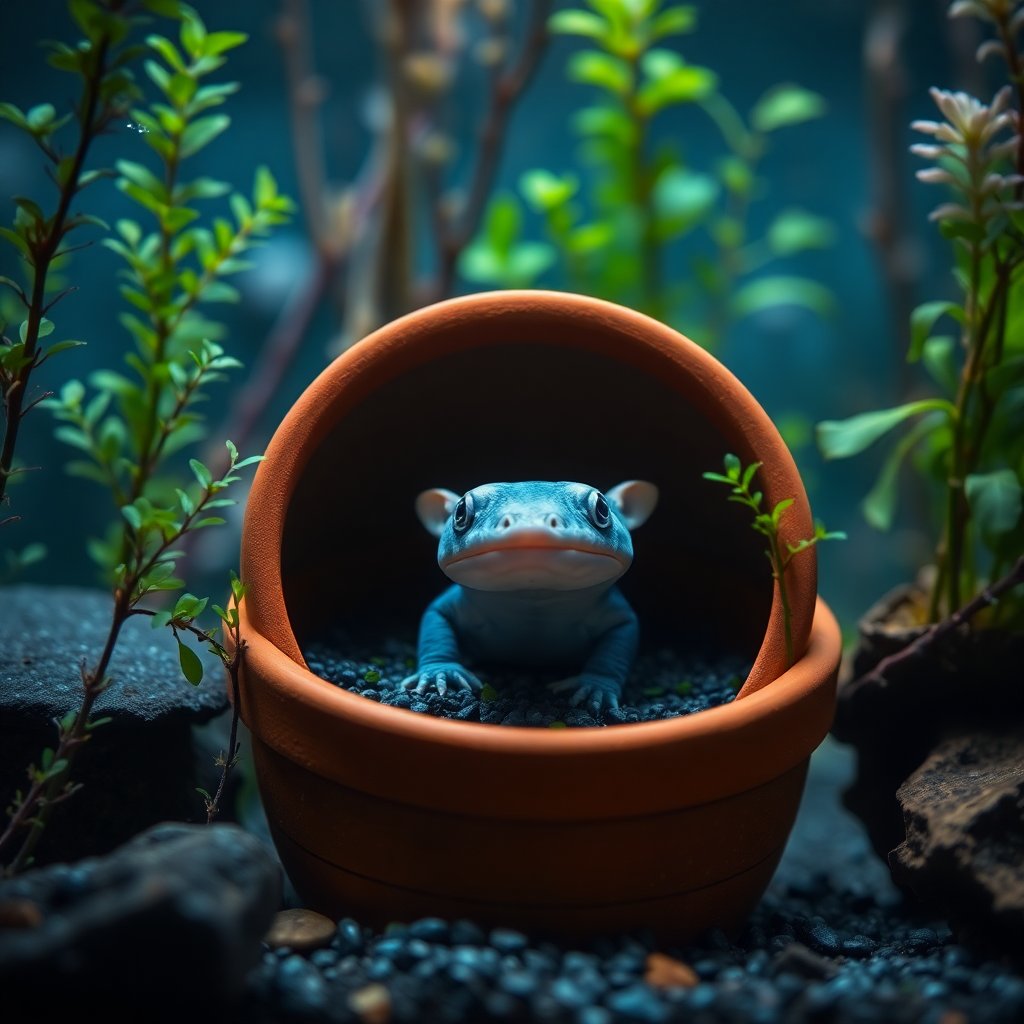
If you scroll through axolotl tank photos, you'll notice something: the tanks that look the most natural — terra cotta pots, slate tiles, PVC tunnels, bits of driftwood — are also typically the tanks where the axolotls look healthiest. Full gill filaments, calm posture, active at feeding time. That's not coincidence.
Those hides aren't decoration. They're one of the most important behavioral requirements in your axolotl's environment.
Why Hides Matter So Much
Axolotls are ambush predators in the wild. In Lake Xochimilco and the surrounding canals of Mexico City, they spend most of their time resting under rocks, in crevices along the lakebed, and in dense aquatic vegetation — not swimming in open water. Their natural state is hidden, still, conserving energy, and watching.
When you put an axolotl in a tank with no cover, you're placing them in a state of constant low-level stress. They're exposed. There's nowhere to retreat. They'll spend energy being vigilant instead of being calm, eating, and resting.
A stressed axolotl will:
- Lose appetite or feed erratically
- Float (a classic stress response)
- Curl gill stalks forward and downward — the most visible stress indicator
- Develop gill filaments that look sparse or ragged instead of full and feathery
- Pace along tank walls or spend excessive time at the surface
A well-hided axolotl will:
- Rest calmly in a preferred hide during the day
- Come out confidently and actively at feeding time
- Have full, healthy-looking gills that extend upward
- Gradually become more interactive and curious over time
The investment in proper hides pays off directly in health and behavior.
The Best Hides (Ranked)
1. Terra Cotta Pots — Community Favorite
The overwhelming community favorite, and for good reason. Terra cotta flower pots are:
- Completely inert and fish/amphibian safe (unglazed, no coatings)
- The perfect diameter for adult axolotls
- Available in multiple sizes for different life stages
- Nearly free ($1–3 at any hardware or garden store)
- Heavy enough to stay in place
Preparation: Chip or grind a notch out of the rim using tile nippers, an angle grinder, or by carefully scoring with a chisel. The notch creates an entrance that your axolotl can fit through comfortably. Rinse thoroughly with plain water before adding — no soap, no chemicals, ever.
Get at least two: one sized for your axolotl now (the opening should be about as wide as your axolotl plus 1 inch), and one slightly larger for when they grow. Axolotls grow fast in the first year.
Orientation: Most axolotls prefer pots laid on their side with the entrance facing a corner. Some prefer them upright with a notch. Watch which orientation your axolotl actually uses.
2. PVC Pipe — Best DIY Hide
Schedule 40 PVC pipe (food-grade, not treated) is inert, extremely durable, available at any hardware store, and axolotls love tunneling through it. Cut to 10–14 inches, smooth the cut edges with sandpaper (removes sharp burrs that could damage gills), and you have an ideal axolotl tunnel.
Sizing: Diameter should be about 1.5–2x your axolotl's body width. They want a snug but not tight fit. For adult axolotls (8–12 inches), 3–4" diameter pipe works well. For juveniles, 1.5–2" diameter.
Cost: A 2-foot section of 3" PVC costs about $3 at a hardware store. Cut it in half for two hides.
3. Slate Tiles / Flat Rock Arrangements
Propped at an angle with small rock supports, slate tiles create flat cave entrances that mimic the rock crevices axolotls use in nature. Completely inert, safe, and heavy enough that your axolotl can't dislodge them easily.
Stack two tiles with a small piece of gravel acting as a spacer, creating a low horizontal cave. Axolotls that don't favor enclosed pots often love flat-roofed hiding areas.
→ Shop natural slate tiles for aquariums on Amazon
4. Commercial Aquarium Caves and Hides
The aquarium market offers a wide range of ceramic caves, resin logs, coconut shell hides, and decorative tunnels. Many of these work very well for axolotls. Key considerations when buying:
Size first: Adult axolotls (10–12 inches) need hides large enough to turn around inside. Many fish-focused hides are sized for much smaller animals. Measure the internal diameter carefully.
Material safety: Ceramic and unglazed pottery are safe. Resin hides are generally safe if labeled aquarium-safe. Avoid anything with paint, glaze, or coating not rated for aquatic use.
No sharp edges: Axolotls are clumsy and will bump into everything. Sharp edges or rough surfaces can damage their delicate gills or skin, especially during feeding excitement.
→ Shop aquarium caves and hides on Amazon
5. Coconut Shell Hides
Halved coconut shells (sold as aquarium or reptile hides) work well for axolotls that prefer smaller, more enclosed spaces. They're natural, inert, and provide a dark interior. Size up for larger axolotls — two halves propped against each other create a larger cave.
→ Shop coconut shell hides for aquariums on Amazon
What NOT to Use
Plastic decorations with sharp edges. Axolotls regularly bump into tank decor during feeding activity. Sharp plastic edges on budget decorations can slice through gill filaments, which are extremely delicate.
Anything painted or coated without aquarium-safe rating. Craft store items, painted decorations, untreated wood from outdoors — all can leach chemicals into the water. Only use items explicitly rated for aquarium use or natural materials known to be inert (terra cotta, PVC, slate).
Hides too small to turn around in. A hide where your axolotl can enter but not maneuver creates a trap. If they can't back out, they panic and thrash, causing injury. Test the size before adding to the tank.
Anything with small holes or gaps. Axolotls can get limbs stuck in small openings. This is a genuine veterinary emergency — a trapped limb can be injured within hours. All entrances should be 3–4 inches minimum in diameter for adults.
How Many Hides?
Minimum: One hide per axolotl. A single axolotl in a 20-gallon tank needs at least one hide where they feel secure.
Better: Two or three hides per axolotl, positioned in different areas of the tank. More options mean your axolotl can choose based on temperature gradients, light levels, and mood.
Multiple axolotls: Each axolotl needs its own territory — at least one exclusive hide that "belongs" to it. If you have two axolotls, provide 3–4 hides so there's no competition for shelter. Competition for hides leads to nipping and stress.
Position hides in different corners and areas of the tank to create visual separation. The more distinct territories you create, the more peacefully multiple axolotls coexist.
Observation: Let Your Axolotl Tell You
Your axolotl will show you which hides it prefers — it'll use one or two constantly and ignore others. Watch where it goes, and put more options in those areas. Some axolotls strongly prefer enclosed tunnels (PVC, pot with small entrance), others prefer flat slate caves with open sides. Both are valid; individual preference is real.
Hide Comparison Table
| Hide Type | Cost | Durability | Ease of Setup | Axolotl Approval | |---|---|---|---|---| | Terra cotta pot | $1–3 | Excellent | 5 min prep | ⭐⭐⭐⭐⭐ | | PVC pipe | $2–4 | Excellent | 10 min prep | ⭐⭐⭐⭐⭐ | | Slate tiles | $5–15 | Excellent | Easy | ⭐⭐⭐⭐ | | Commercial ceramic hide | $10–25 | Very Good | Drop in tank | ⭐⭐⭐⭐ | | Coconut shell | $8–15 | Good | Drop in tank | ⭐⭐⭐½ |
FAQ
Do I need hides if my axolotl is active and seems happy? Yes. An axolotl that appears active in a hide-free tank is likely stressed — they expend more energy in exposed environments. Hides don't prevent activity; axolotls with good hides often become more active and interactive once they feel secure.
My axolotl never uses the hides I bought — is that normal? It may be a size, position, or orientation issue. Try different placements, try laying a pot on its side vs. upright, and check that the entrance is sized correctly. Give it a few days — axolotls explore new objects cautiously before committing to using them.
Can I use live plants as hiding places? Live plants can provide some cover but shouldn't replace dedicated hides. Dense Java fern, Anubias, or hornwort does help an axolotl feel less exposed, but plants don't provide the enclosed security of a pot or PVC hide. Use both.
My axolotl keeps rearranging the hides — should I stop it? No — this is completely normal and actually a sign of a healthy, engaged axolotl. They push and burrow and reposition objects. It's fine. Weight your hides if they keep getting knocked into problematic positions.
How do I clean hides without chemicals? Remove and scrub with a dedicated aquarium brush under hot water. That's it. No soap. If algae or biofilm buildup is heavy, soak in a mild white vinegar solution (1:10 ratio), then rinse very thoroughly before returning to the tank.
→ Shop aquarium cleaning brushes on Amazon
As an Amazon Associate we earn from qualifying purchases. This article contains affiliate links; if you buy through them we may earn a small commission at no additional cost to you.