 Axolotl Den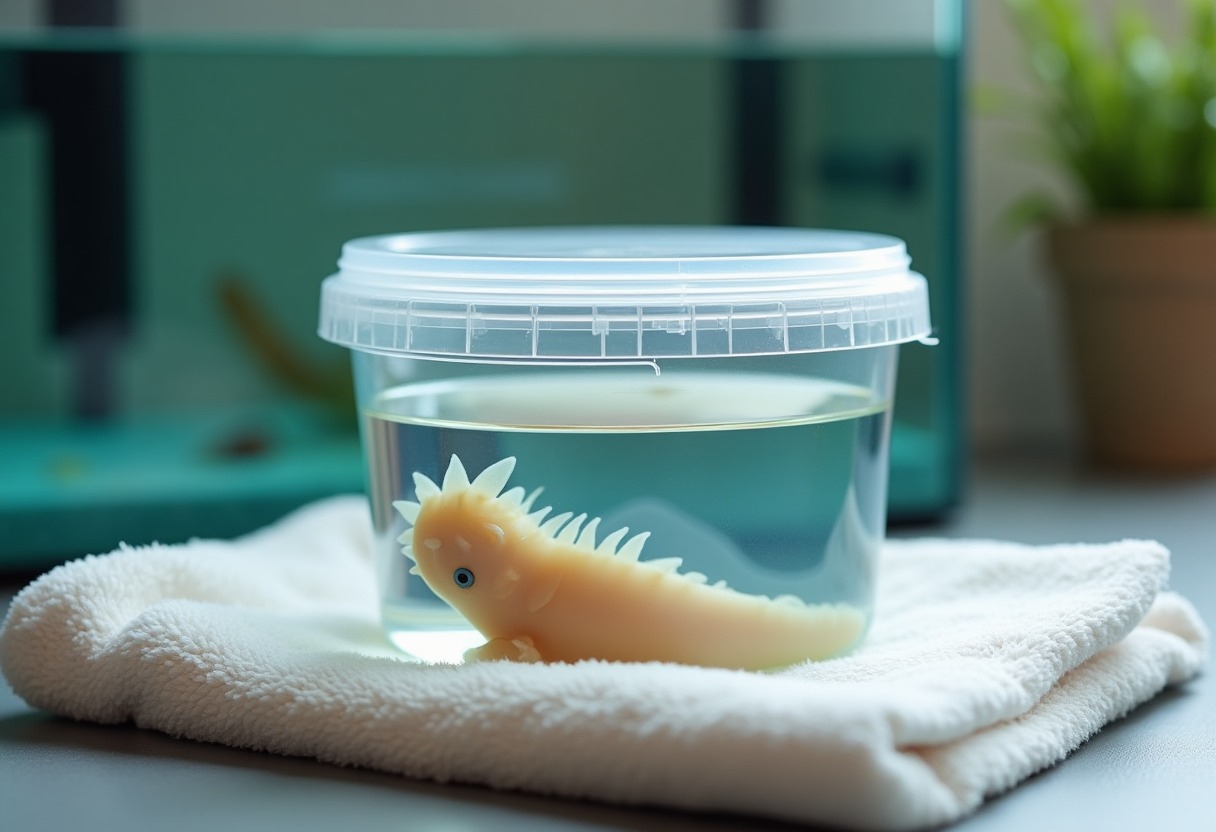
Moving your axolotl doesn't have to be a nightmare of stress hormones and damaged gills. Whether you're relocating across town or taking your amphibian to an exotic veterinarian, the right handling technique and transport setup protects both their delicate skin and your sanity.
Why Axolotl Transport Requires Special Care
Axolotls face unique physiological challenges during transport that make them far more vulnerable than hardy fish species. Their permeable skin absorbs toxins and stress hormones directly from water, while their external gills are easily damaged by turbulence or poor water quality. Unlike fish that can survive brief periods in minimal water, axolotls need constant access to clean, oxygenated water at the correct temperature.
The stress response in axolotls triggers cortisol release, which suppresses their immune system for days after transport. This makes them vulnerable to fungal infections and bacterial issues that can appear 48-72 hours post-move. Poor transport conditions compound this risk, creating a cascade of health problems that proper technique easily prevents.
Temperature shock represents another critical concern. Axolotls maintain strict temperature requirements between 60-64°F, and even brief exposure to warmer conditions during transport can trigger dangerous stress responses or respiratory distress.
Essential Transport Equipment and Setup
The foundation of safe axolotl transport starts with the right container system. Standard fish bags fail miserably for axolotls — their sharp claws puncture plastic easily, and the limited water volume creates unstable conditions.
A proper transport setup requires a rigid container with smooth walls and secure lid. → Shop specimen containers aquarium on Amazon for veterinary visits, choosing containers with at least 1 gallon capacity for adult axolotls. The container walls must be high enough to prevent jumping while allowing adequate water depth for gill function.
Water preparation becomes critical 24 hours before transport. Fill your transport container with aged, conditioned water from the axolotl's home tank. Avoid using fresh tap water, even with → Shop aquarium water conditioner on Amazon, as the chemical differences can stress an already anxious animal.
Temperature stability requires insulation planning. → Shop insulated shipping cooler on Amazon provides the best thermal protection, maintaining stable temperatures for 4-6 hours without external heat sources. Pack frozen gel packs wrapped in towels around the transport container, never allowing direct contact with the container walls.
Aeration becomes essential for trips longer than 30 minutes. → Shop portable battery air pump on Amazon with gentle output prevents oxygen depletion while avoiding excessive turbulence that damages external gills.
Safe Handling Techniques
Proper axolotl handling requires wet hands and minimal direct contact. Rinse your hands thoroughly with aquarium water — never tap water or soap residue — before any contact. Soap residues, lotions, or hand sanitizers can chemically burn their permeable skin within seconds.
The scoop method provides the safest capture technique. Use a large, smooth-edged container to gently guide the axolotl into the transport vessel rather than grasping with hands. If direct handling becomes necessary, support the body with both hands, one behind the front legs and one supporting the midsection. Never grab the tail, limbs, or gill stalks.
Speed matters more than precision during the actual transfer. Once you begin the capture process, complete it quickly to minimize handling stress. Extended chase sessions around the tank cause more harm than brief, efficient capture.
For aggressive or stressed axolotls, temporary isolation in a smaller tank area using a divider makes capture easier and reduces trauma for both keeper and animal.
Transport Method Comparison
| Transport Duration | Container Type | Aeration Needed | Temperature Control | Success Rate | |------------------|----------------|-----------------|-------------------|--------------| | Under 30 minutes | 1-gallon specimen jar | No | Insulated bag | 95% | | 30-60 minutes | 2-gallon with lid | Battery air pump | Cooler with ice packs | 90% | | 1-3 hours | 5-gallon bucket | Continuous aeration | Cooler with gel packs | 85% | | 3+ hours | Portable tank | Filtration system | Active temperature control | 80% |
Recommended Transport Products
→ Shop fish transport bags on Amazon work only for emergency short-distance moves under 15 minutes. Double-bag the axolotl with tank water, leaving minimal air space to prevent bouncing during transport.
Rigid specimen containers offer superior protection for veterinary visits and medium-distance moves. Choose containers with screw-on lids and smooth interior surfaces. The container should hold 2-3 times the axolotl's body volume in water.
Battery-powered air pumps become essential for trips exceeding 30 minutes. Select models with adjustable flow rates to provide gentle oxygenation without creating strong currents that stress the animal.
Insulated coolers maintain temperature stability for extended transport. Styrofoam coolers work adequately for short trips, but hard-sided coolers with thick insulation perform better for longer journeys.
Digital thermometers with alarms alert you to dangerous temperature shifts during transport. Stick-on thermometer strips provide continuous monitoring without battery dependence.
Advanced Transport Strategies Most Guides Miss
Pre-transport conditioning reduces stress by acclimating your axolotl to temporary containers. Place them in the transport container for 10-15 minutes daily during the week before travel, using familiar tank water and gradually increasing duration.
Pheromone management using water from an established, calm tank can reduce transport anxiety. If you have multiple axolotls, water from a tank with relaxed animals contains calming chemical signals that benefit stressed individuals.
Post-transport quarantine prevents disease transmission and allows monitoring for delayed stress responses. Set up a quarantine tank setup with identical water parameters to your main tank before transport day.
Emergency backup planning saves lives during extended transport. Pack extra batteries for air pumps, backup gel packs for temperature control, and water testing strips to monitor ammonia buildup during long trips.
Feeding schedules require adjustment around transport events. Stop feeding 24 hours before transport to reduce waste production and digestive stress. Resume normal feeding schedules only after the axolotl shows normal behavior in their destination tank.
FAQ
How long can an axolotl safely stay in a transport container? Axolotls can survive 4-6 hours in proper transport conditions with adequate water volume, temperature control, and aeration. However, stress levels increase significantly after the first hour, making shorter trips preferable. For moves longer than 6 hours, plan rest stops to check water quality and temperature, refreshing the water if ammonia levels rise above 0.25 ppm.
What water temperature should I maintain during transport? Maintain transport water between 60-64°F, matching your axolotl's home tank temperature exactly. Temperature fluctuations of more than 2°F can trigger stress responses or respiratory distress. Use digital thermometers to monitor continuously, and pack extra gel packs wrapped in towels to maintain stable temperatures for 4-6 hours without external power.
Can I transport multiple axolotls in the same container? Never transport multiple axolotls together unless they're juveniles under 4 inches long. Adult axolotls may bite each other when stressed, causing permanent injury to limbs or gills. The stress of transport also makes them more aggressive than normal. Use separate containers for each animal, even if they normally coexist peacefully in the same tank.
What signs indicate my axolotl is too stressed for transport? Cancel transport if your axolotl shows rapid gill movement, excessive mucus production, refusal to eat for more than 48 hours, or unusual lethargy. These indicate elevated stress levels that make successful transport unlikely. Stressed axolotls also develop increased susceptibility to infections, making them poor candidates for the additional stress of moving or veterinary handling.
How do I prepare my destination tank before bringing my axolotl home? Set up the destination tank 48 hours before transport with properly cycled filtration and aged water matching your transport container parameters. Test ammonia, nitrite, and pH levels to ensure they match the origin tank within 0.1 units. Acclimate slowly by floating the transport container in the destination tank for 20 minutes, then gradually mixing destination tank water into the transport container over another 30 minutes before final release.
Master these transport techniques and your axolotl arrives healthy and calm, ready to explore their new environment without the cascade of stress-related health issues that plague poorly planned moves.
Some links on this page are affiliate links. We may earn a small commission if you purchase through them, at no extra cost to you.
As an Amazon Associate we earn from qualifying purchases. This article contains affiliate links; if you buy through them we may earn a small commission at no additional cost to you.