 Axolotl Den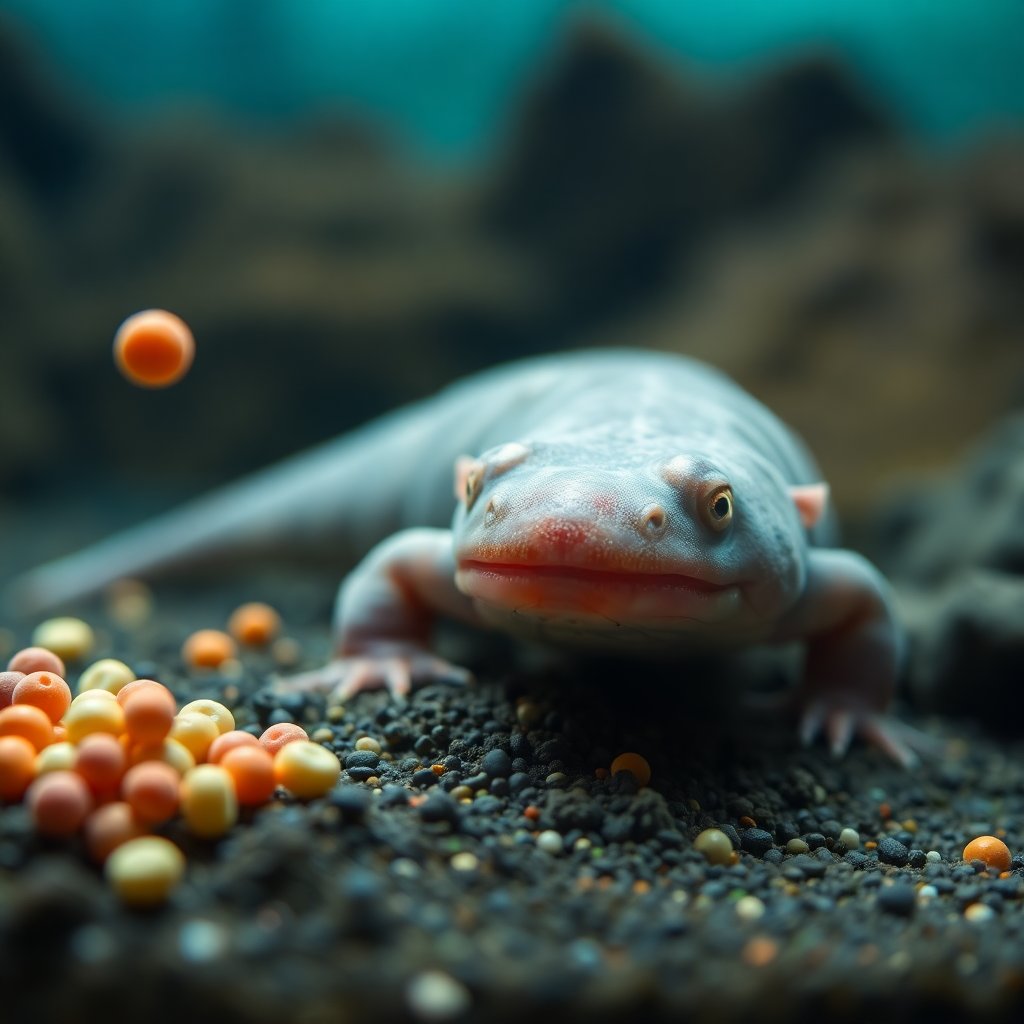
Your axolotl walked to the food, sniffed it, and walked away. Or didn't come out at all when you dropped pellets in. Now you're worried.
First: don't panic. Axolotls are slow-metabolism animals that can go 2–3 weeks without eating and be completely fine. They're adapted to a life of ambush hunting in cold mountain lakes — periods of food scarcity are part of their biology. Occasional food refusal is normal. But if it's been more than a week, or if you're seeing other symptoms, it's worth investigating systematically.
Here's the approach this community has found works.
Step 1: Test Your Water — Do This First
This is always the first step. Before you change anything about feeding, test your water parameters. Most axolotl food refusal is caused by water quality issues, not pickiness or illness.
Test for:
- Ammonia (should be 0 ppm — anything above 0 is stressful)
- Nitrite (should be 0 ppm — toxic at any detectable level)
- Nitrate (should be under 20 ppm — manage with water changes)
- Temperature (should be 60–68°F — critical for axolotl health)
- pH (should be 7.4–8.0)
Don't use test strips — they're notoriously inaccurate. Use a liquid test kit.
→ Shop API Master Liquid Test Kit on Amazon
If ammonia or nitrite are elevated: Do an immediate 30–50% water change with dechlorinated water at the same temperature. Add Seachem Prime — it temporarily detoxifies ammonia and nitrite for 24–48 hours while your biological filter catches up.
→ Shop Seachem Prime water conditioner on Amazon
If temperature is above 70°F: Address this urgently. High temperature is one of the most common causes of appetite loss in axolotls. See the temperature section below.
Step 2: Check Temperature
Axolotls are cold-water animals. Above 72°F they become stressed, above 75°F they start developing health problems, and above 80°F is dangerous. Most appetite loss in warm months is temperature-related.
Signs of heat stress alongside food refusal: floating at the surface, rapid gill movement, pale coloration, lethargy.
How to cool a tank:
- Fan blowing across the water surface (evaporative cooling can drop 3–5°F)
- Frozen water bottles or ice packs in a sealed bag, floated in the tank
- Moving the tank to a cooler room
- Aquarium chiller (best permanent solution for warm climates)
→ Shop aquarium chillers for axolotl tanks on Amazon
Once temperature is back in the 60–68°F range, appetite often returns within a few days.
Step 3: Check for Stress Signs
A stressed axolotl won't eat. Signs of stress include:
- Gills curled forward — the most reliable stress indicator. Healthy gills extend upward and back; stressed gills curl forward toward the face.
- Floating — especially at the surface or tilting to one side
- Pale or washed-out color
- Hiding constantly and not emerging at feeding time
- Rapid gill movement — suggests low oxygen or high temperature
If you're seeing stress signs alongside food refusal, the water or environment is almost certainly the cause. Address water quality and temperature first before trying any feeding interventions.
Step 4: Consider Recent Changes
Axolotls are sensitive to change. Think about what's happened in the last 1–2 weeks:
- New tank or recent move? Cycling instability or transport stress can cause food refusal for 1–2 weeks.
- Water change with different water? Temperature shock or pH differences cause appetite loss.
- New decorations, hides, or rearrangement? Some axolotls are disrupted by tank changes. Give them a few days to resettle.
- Different food offered? Some axolotls are strongly food-specific and reject unfamiliar items initially.
- Increased foot traffic near the tank? Unusual activity nearby can stress individual animals significantly.
- New axolotl added? Competition, nipping, or social stress from a new tankmate affects appetite.
Step 5: Try Different Foods
If water quality is fine and there are no other stress signs, the issue may simply be food preference or boredom.
If you've been feeding pellets: Try frozen bloodworms or a fresh nightcrawler piece. If you've been feeding bloodworms: Try earthworm pieces or live brine shrimp. If they're ignoring dropped food: Try using feeding tongs to wiggle food directly in front of them — the movement often triggers a feeding response in reluctant eaters. Live food: Blackworms, live brine shrimp, or small nightcrawlers often get picky eaters interested when frozen/pellet food doesn't.
Some axolotls develop a strong preference for a single food type and will reject anything else. If yours has been eating only pellets for months, try nightcrawlers — the novelty alone often works.
→ Shop earthworms/nightcrawlers for axolotl feeding on Amazon
→ Shop frozen bloodworms for axolotls on Amazon
Step 6: Watch for Other Symptoms
Food refusal combined with any of these warrants closer attention:
Bloating — swollen belly, especially if accompanied by floating. Indicates possible impaction, constipation, or infection. Do not feed a bloated axolotl.
Fungus — fluffy white cottony growths, usually starting on gills or skin wounds. Treat with salt baths (see below) and quarantine.
Wounds or missing limbs — check gills and all four limbs carefully. Nipping from a tankmate, ammonia burns, or rough handling can cause injuries that affect appetite.
Impaction — constipation from swallowing gravel or substrate. Classic signs: bloating, floating, no visible feces for extended period. More common in tanks with gravel substrate.
What to Do for Impaction
If you suspect impaction (bloated axolotl, floating upside down or tilted, not eating, no recent feces):
- Move to a quarantine container with bare bottom and clean, cold, dechlorinated water
- Do not feed — fasting allows the digestive system to work
- Keep water cold (60–65°F), well-oxygenated
- Some keepers report success with a small amount of canned pumpkin (plain, no spices) — mix a small amount in the water. It may help move a blockage
- Monitor for 48–72 hours
- If no improvement or condition worsens, contact an exotic vet
See our quarantine tank setup guide for how to set up a temporary housing container quickly.
Handling Food Refusal After Illness or Treatment
Axolotls that have been through salt bath treatments, medication, or illness often refuse food for several days to 2 weeks after recovery. This is normal — their digestive system and appetite require time to normalize. Don't force-feed or try multiple different foods in quick succession; offer food every 2–3 days and remove uneaten food promptly.
Food Preference Guide
| Food | Acceptance | Best For | Notes | |---|---|---|---| | Nightcrawlers | Very High | Adults | Best overall food, nutrient complete | | Frozen bloodworms | High | All ages | Good supplement, not sole diet | | Hikari pellets | High (when trained) | Adults | Convenient, balanced | | Frozen brine shrimp | Medium-High | Juveniles | Small enough for young axolotls | | Live daphnia | High | All ages | Good enrichment, mild laxative effect | | Frozen mysis shrimp | Medium | Adults | Good variety |
When to See a Vet
If your axolotl has been refusing food for 3+ weeks, is visibly losing body mass, or is showing signs of physical illness (persistent bloat, fungus that doesn't respond to salt baths, deteriorating gills, wounds that aren't healing), it's time for an exotic animal vet.
Important: Find a vet who specifically treats aquatic or amphibian species before you need one. Not all "exotic" vets have experience with axolotls. Ask specifically about aquatic animal experience when you call.
Most episodes of food refusal resolve on their own once water quality is correct and the axolotl is given a few days of peace and quiet. The step that resolves most cases: do a 30% water change, lower the temperature slightly, add Seachem Prime, and give it 3–5 days.
FAQ
How long can an axolotl go without eating? 2–3 weeks is typical before any health concern. Healthy adults have body reserves that sustain them well through periods of food refusal. If your axolotl is active, healthy-looking, and shows no other symptoms, a week or two of food refusal is not an emergency.
Why does my axolotl spit out food immediately? Common with pellets in tanks with strong current — the food moves before they can orient. Also common if pellets are too large (should be roughly the width of the axolotl's head). Try a calmer area of the tank, smaller food pieces, or live/frozen food that behaves differently in water.
Should I use feeding tongs? Yes — they're one of the most useful axolotl accessories. Tongs let you wiggle food directly in front of a reluctant eater, remove uneaten food promptly, and feed specific individuals in a multi-axolotl tank.
→ Shop feeding tongs for axolotls on Amazon
My axolotl was eating fine, then suddenly stopped — what happened? The most common sudden-onset causes: temperature spike (check the thermometer), ammonia spike from uneaten food or overfeeding, a new decoration leaching something into the water, or stress from a change in the room. Test the water and check temperature as your first response.
Is it normal for axolotls to be less hungry in winter? Yes. Axolotls naturally reduce feeding in cooler temperatures, which often coincide with winter if your home gets cooler. This is seasonal and normal — don't force-feed.
As an Amazon Associate we earn from qualifying purchases. This article contains affiliate links; if you buy through them we may earn a small commission at no additional cost to you.