 Axolotl Den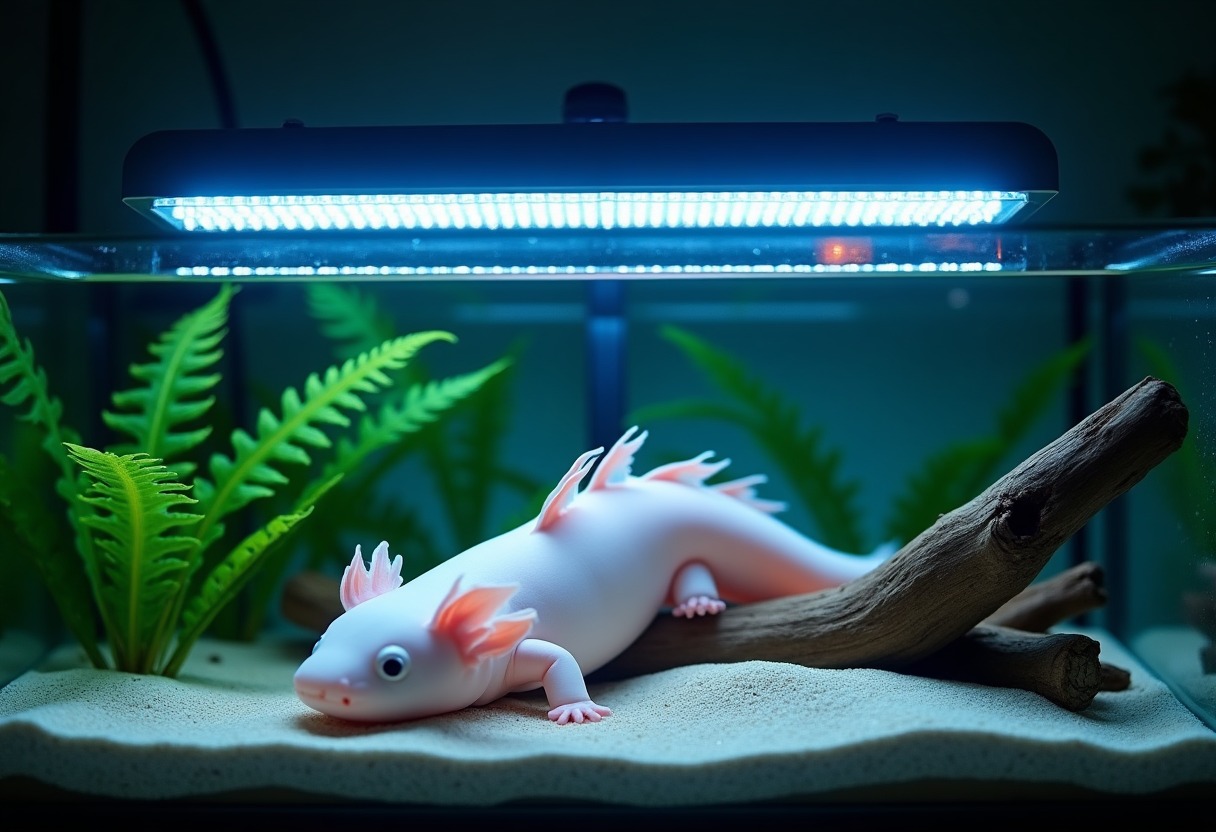
Poor axolotl tank lighting creates stressed animals that hide constantly and refuse food. The right lighting setup transforms your tank into a comfortable environment where axolotls display natural behaviors while supporting healthy plant growth.
Why Axolotl Tank Lighting Matters More Than Most Keepers Think
Axolotls possess rudimentary eyes that barely detect light changes, making them particularly sensitive to bright illumination. Wild axolotls inhabit the murky lake bottoms of Xochimilco, where filtered sunlight creates dim, consistent conditions throughout the day. Your tank lighting must replicate these subdued conditions while providing enough illumination for plant photosynthesis and your viewing enjoyment.
Excessive lighting triggers stress responses in axolotls, causing them to retreat to hiding spots and reducing their activity levels. This stress directly impacts feeding behavior and can compromise their immune system. Conversely, insufficient lighting prevents live plants from thriving, leading to poor water quality and algae blooms that further stress your axolotls.
The key lies in balancing three critical factors: light intensity (measured in PAR values), spectrum composition, and photoperiod duration. Most standard aquarium lights designed for tropical fish emit far too much light for axolotl comfort.
LED vs Fluorescent: The Real Performance Differences
Modern LED aquarium lights offer superior control over light intensity and spectrum compared to fluorescent options. LEDs generate less heat, consume 60-70% less electricity, and last 3-5 times longer than fluorescent bulbs. For axolotl tanks requiring consistent cool temperatures, LED lights eliminate the heat burden that forces your chiller to work overtime.
The most significant advantage of LEDs lies in dimming capability. Quality → Shop LED aquarium lights on Amazon allow you to reduce output to 10-20% of maximum brightness, creating the subdued environment axolotls prefer. Fluorescent lights typically operate at fixed output levels, making them unsuitable for light-sensitive species.
Fluorescent lights still maintain relevance in specific scenarios. T5 and T8 fluorescent fixtures cost significantly less upfront and provide even light distribution across larger tanks. However, their inability to dim and higher heat output make them problematic for axolotl applications.
Optimal Photoperiod and Light Intensity Settings
Your axolotl tank requires a gentle 8-10 hour photoperiod that mimics natural day-night cycles without overwhelming your animals. Start with 20-30% maximum LED output during peak hours, gradually adjusting based on axolotl behavior. If your axolotls consistently hide during lighting periods, reduce intensity by 10% increments until they display normal activity.
The ideal lighting schedule follows this pattern: 2-hour sunrise period (gradual increase from 0% to target intensity), 4-6 hours at stable target intensity, 2-hour sunset period (gradual decrease back to 0%), and 12-14 hours of complete darkness. → Shop aquarium light timer on Amazon to automate this cycle and maintain consistency.
PAR (Photosynthetically Active Radiation) readings should remain between 10-30 μmol/m²/s at substrate level for axolotl tanks with live plants. This low-light range supports basic plant growth while keeping axolotls comfortable. Standard plant tanks typically require 50-150 PAR, highlighting why axolotl lighting demands specialized approach.
LED vs Fluorescent Comparison for Axolotl Tanks
| Feature | LED Lights | Fluorescent Lights | |---------|------------|-------------------| | Heat Output | Minimal - won't affect tank temperature | Moderate - increases chiller workload | | Dimming Control | Variable 0-100% with quality units | Fixed output only | | Spectrum Control | Full spectrum customization available | Limited to bulb specifications | | Lifespan | 30,000-50,000 hours typical | 8,000-15,000 hours typical | | Energy Efficiency | 70% less power consumption | Standard electrical draw | | Upfront Cost | $80-300 for quality units | $30-100 for fixtures |
Best Plant Options for Low-Light Axolotl Tanks
Java fern thrives in the low-light conditions perfect for axolotls, requiring only 15-25 PAR to maintain healthy growth. This hardy plant attaches to driftwood or rocks, eliminating substrate concerns while providing natural cover that axolotls appreciate. Java fern propagates through adventitious plantlets, allowing you to expand coverage without additional purchases.
Anubias species represent another excellent choice for axolotl tanks, tolerating extremely low light while producing broad leaves that create natural hiding spots. Anubias nana and A. barteri varieties work particularly well, requiring minimal maintenance and handling the cool water temperatures axolotls demand. → Shop low light aquarium plants on Amazon for these hardy options.
Cryptocoryne species adapt to low-light conditions and provide substrate-level cover without creating maintenance issues. C. wendtii varieties tolerate the 60-68°F temperatures optimal for axolotls while slowly spreading to form natural carpets. These plants require → Shop aquarium plant fertilizer on Amazon monthly applications to maintain healthy growth in nutrient-limited environments.
Avoid high-light demanding plants like carpet species, stem plants, or colorful varieties that require intense illumination. These plants will struggle and decompose in axolotl-appropriate lighting, contributing to water quality problems covered in our Axolotl Water Parameters Complete Guide.
Advanced Lighting Techniques Most Guides Miss
Moonlight simulation using blue LEDs at 1-3% intensity during dark periods helps maintain natural circadian rhythms without stressing axolotls. This subtle illumination allows you to observe nighttime behaviors while supporting beneficial bacteria populations that require minimal light for optimal function.
Strategic lighting placement prevents hotspots that force axolotls into constant hiding. Position lights toward tank ends rather than center-mounting, creating graduated light zones that give axolotls choice in their preferred illumination levels. This technique works particularly well with the hiding spots recommended in our Best Hides For Axolotls guide.
Consider using → Shop aquarium light hood on Amazon to contain and direct light output, preventing spillover that can stress axolotls and reducing ambient room lighting effects on your tank's photoperiod. Quality hoods also prevent dust accumulation on LED arrays, maintaining consistent output over time.
Light spectrum tuning enhances plant growth without increasing overall intensity. Blue spectrum (420-470nm) supports photosynthesis efficiently while appearing dimmer to axolotl eyes. Red spectrum (660-700nm) promotes plant health but should represent only 10-15% of total output to avoid creating an unnatural environment.
FAQ
How many hours of light do axolotls need per day? Axolotls function best with 8-10 hours of dim lighting daily, followed by 14-16 hours of darkness. This photoperiod mimics their natural lake environment where filtered sunlight creates consistent but subdued illumination. Longer lighting periods stress axolotls and can trigger feeding problems, while shorter periods may insufficient for live plant health.
Can I use regular LED strips for my axolotl tank lighting? Regular LED strips lack the spectrum control and dimming capability essential for axolotl tanks. Aquarium-specific LEDs provide proper spectrum ratios for plant growth while allowing intensity reduction to axolotl-comfortable levels. Standard LEDs often emit too much blue or white light, creating harsh conditions that stress axolotls and promote algae growth.
What light intensity is safe for axolotls with live plants? Target 10-30 PAR (μmol/m²/s) at substrate level for axolotl tanks with live plants. This low-light range supports hardy plants like Java fern and Anubias while keeping axolotls comfortable. Higher intensities cause axolotls to hide constantly and refuse food, while lower levels prevent proper plant photosynthesis.
Do axolotls need special lighting for different color morphs? All axolotl morphs require identical lighting conditions regardless of their coloration. Leucistic, wild-type, and melanoid axolotls discussed in our Axolotl Colors And Morphs guide share the same light sensitivity and environmental needs. Colored lighting can enhance visual appearance but provides no health benefits and may stress axolotls if too intense.
Should I leave aquarium lights on at night for my axolotls? Never leave bright aquarium lights on overnight for axolotls. These nocturnal animals require 12-14 hours of darkness for proper circadian rhythm maintenance. Constant lighting disrupts natural behaviors, suppresses appetite, and increases stress levels that can lead to health problems covered in our Axolotl Diseases Symptoms Guide.
Proper axolotl tank lighting transforms your setup from a sterile container into a thriving ecosystem where both your animals and plants flourish under conditions that respect their natural needs.
Some links on this page are affiliate links. We may earn a small commission if you purchase through them, at no extra cost to you.
As an Amazon Associate we earn from qualifying purchases. This article contains affiliate links; if you buy through them we may earn a small commission at no additional cost to you.