 Axolotl Den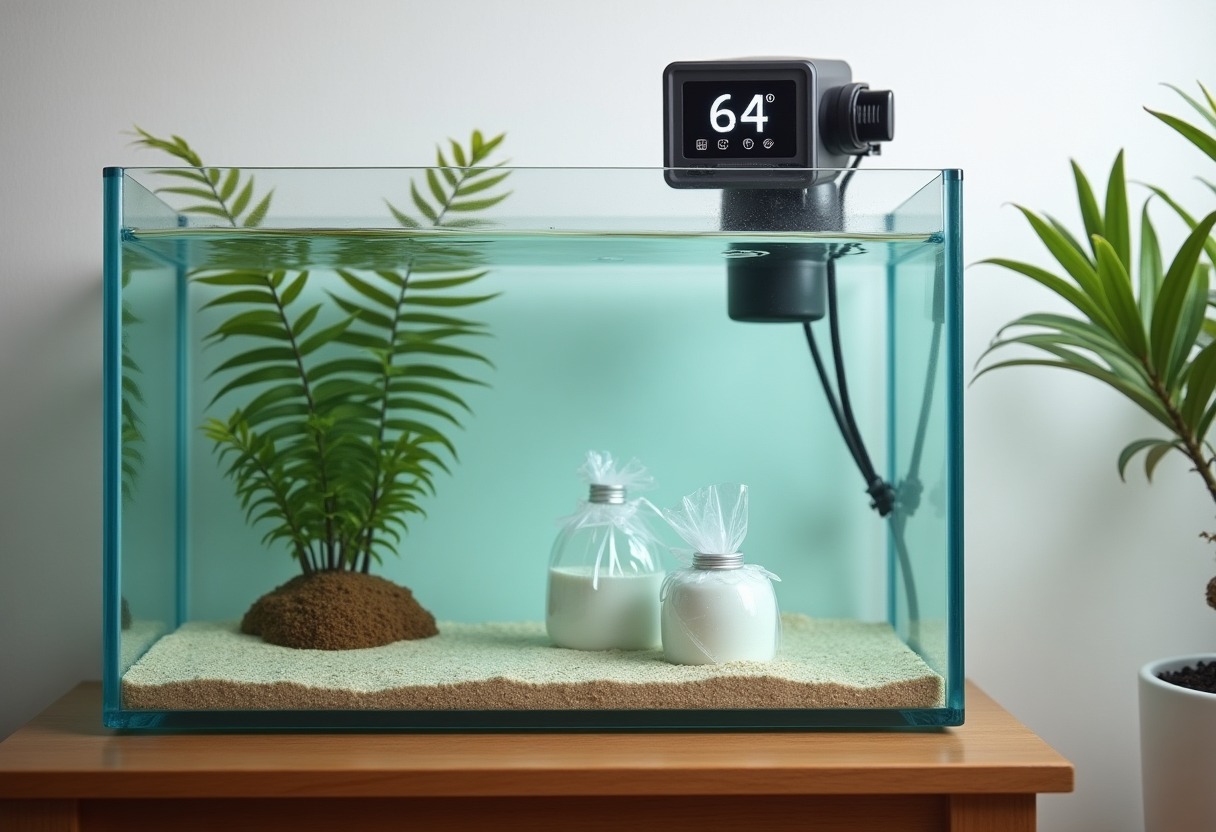
Your apartment hits 78°F in July, and your axolotl tank just climbed to 72°F — three degrees past the safe zone. A proper aquarium chiller costs $300-600, but your budget topped out at the tank itself.
Axolotls need water between 60-64°F to stay healthy. Above 68°F, their metabolic stress increases. Above 74°F, you're risking fungal infections and organ damage. The standard advice points straight to chillers, but seven alternative methods can drop your tank temperature 4-8 degrees when properly combined — enough to bridge the gap until you can afford the premium equipment or get through a brutal summer week.
Why Temperature Control Matters More Than Most Axolotl Keepers Realize
Tank temperature directly affects oxygen levels in the water. Every 2°F increase above 64°F reduces dissolved oxygen by roughly 3%. Warm water also accelerates ammonia toxicity and bacterial growth, compounding the stress on your axolotl's gills and internal organs.
When water hits 70°F, you'll notice behavioral changes first: reduced appetite, lethargy, and increased time at the tank surface gasping for oxygen. By 74°F, you're looking at potential gill damage and susceptibility to infections detailed in our Axolotl Diseases Symptoms Guide. This isn't about comfort — it's about survival.
The challenge: most homes maintain 72-76°F ambient temperature in summer. Your tank naturally matches or exceeds room temperature due to equipment heat (filters, lights) and poor air circulation around the glass. Dropping 10-14 degrees requires active intervention.
Seven Methods to Cool Your Axolotl Tank Without a Chiller
1. Aquarium Cooling Fans
Clip-on fans positioned to blow across the water surface increase evaporation, which pulls heat from the tank. This method consistently drops temperature 2-4°F in a 20-gallon tank, up to 6°F in larger volumes with stronger airflow.
Mount two → Shop aquarium cooling fans on Amazon on opposite tank edges, angled to create crossflow. The evaporation effect works best when you remove the tank lid or replace it with mesh screen. Expect to top off 1-2 gallons weekly due to increased water loss.
The catch: this method only works when room temperature stays below 74°F. In hotter conditions, you're just circulating warm air.
2. Frozen Water Bottles
Fill clean plastic bottles with dechlorinated water, freeze them solid, then float them in your tank. Each 1-liter bottle drops a 20-gallon tank by 2-3°F over 3-4 hours.
Float two bottles in the morning and two in the evening during heat waves. Never add ice directly to the tank — the chlorine and rapid temperature swings stress axolotls. Rotate 4-6 bottles through your freezer to maintain continuous cooling coverage.
Monitor with a → Shop digital aquarium thermometers on Amazon placed opposite the bottles. Temperature shouldn't drop more than 1°F per hour to avoid shocking your axolotl. Remove bottles when the tank hits 62°F.
3. Room Air Conditioning Focused on the Tank
Cooling the entire room beats spot-cooling methods for consistency. Drop your room temperature to 68°F, and your tank naturally settles around 64-66°F without daily intervention.
Position your tank away from windows and direct sunlight. Place it in the coolest room in your home — typically north-facing spaces or basements. If you're renting and can't control central AC, a portable unit pointed at the tank area works. Calculate cooling needs: 20 BTU per square foot for rooms with aquariums, since water retains heat longer than air.
Cost consideration: running AC at 68°F instead of 74°F adds roughly $40-70 monthly to electric bills in most climates, still cheaper than chiller operation ($30-50 monthly).
4. Turn Off or Reduce Heat-Generating Equipment
Your tank light generates 2-4°F of heat in a standard 20-gallon setup. Filters add another 1-2°F. During summer peaks, turn lights off completely — axolotls don't need them, and the setup covered in our Axolotl Tank Lighting Guide explains they actually prefer dimmer conditions.
If you're using an under-gravel heater from initial setup, remove it. Review what's detailed in the Axolotl Tank Setup Guide about equipment placement — filters should pull from the bottom and return at the surface to prevent heat pockets.
5. Ice Packs in the Filter Chamber
Some canister filters have room in the media basket for refreezable ice packs. This cools water as it circulates through the filter, dropping tank temperature 1-3°F depending on flow rate and ice pack size.
Wrap ice packs in filter floss or mesh bags to prevent direct contact with biological media — you don't want to crash your nitrogen cycle with temperature shock. Replace packs every 6-8 hours. This method pairs well with surface fans for combined 4-6°F reduction.
6. Basement or Cooler Room Relocation
If you have basement access, moving your entire tank drops ambient temperature by 8-12°F compared to upper floors. Basements naturally maintain 60-65°F year-round in most climates.
The logistics matter: plan the move carefully following guidelines in Safe Axolotl Handling Transport Moving Vet Visits. Drain 75% of tank water, move the tank, refill with temperature-matched water, then transfer your axolotl. You'll also need to address humidity — basements often need → Shop basement dehumidifiers on Amazon to prevent mold around the tank.
7. Clip-On Desk Fans as Backup
Basic → Shop clip-on desk fans on Amazon positioned to blow across the tank surface work nearly as well as specialty aquarium fans at one-third the cost. A 6-inch fan set on medium speed drops temperature 2-3°F in most setups.
Use multiple fans for tanks over 30 gallons. Position them to avoid creating strong current in the water — axolotls tolerate slow flow but struggle in turbulent conditions that affect gill function. The goal is surface evaporation, not water circulation.
Comparing Cooling Methods: Effectiveness and Cost
| Method | Temperature Drop | Setup Cost | Monthly Cost | Maintenance Level | |--------|------------------|------------|--------------|-------------------| | Aquarium cooling fans (2 units) | 3-5°F | $40-60 | $5-8 (electricity) | Low — clean fans monthly | | Frozen water bottles (rotation system) | 3-6°F | $0-15 | $0-2 | High — daily freeze/swap | | Room AC (dedicated cooling) | 6-10°F | $200-400 | $40-70 | Low — seasonal filter changes | | Equipment reduction | 2-4°F | $0 | $0 | None | | Ice packs in filter | 2-3°F | $15-25 | $0 | Medium — twice daily swaps | | Basement relocation | 8-12°F | $0-50 | $0-5 | Low — initial setup only | | Desk fans (surface evaporation) | 2-4°F | $20-35 | $3-6 | Low — weekly cleaning |
The most effective budget strategy combines three methods: room AC or basement placement for baseline cooling, surface fans for consistent evaporation, and frozen bottles as emergency backup during extreme heat.
Products That Make Budget Cooling Work
Surface Evaporation Fans
Standard aquarium cooling fans mount with clips or suction cups and run on 12V power — safe around water, quiet enough for bedrooms. Look for units with adjustable speed controls. Two fans create better airflow than one large fan in most rectangular tanks.
Position fans to blow at a 45-degree angle toward the center of the water surface. This creates circular evaporation patterns that cool more efficiently than direct perpendicular airflow.
Accurate Digital Thermometers
Temperature monitoring becomes critical when you're using multiple cooling methods. Cheap stick-on thermometers lag by 2-3°F and read inconsistently. Digital probe thermometers with external displays update every 30 seconds and maintain accuracy within 0.5°F.
Place the probe mid-depth in the center of your tank, away from filter outlets and frozen bottles. Check readings three times daily during heat waves — morning, afternoon, and evening — to catch temperature spikes before they stress your axolotl.
Mesh Tank Lids for Evaporation
Standard glass lids trap heat and humidity. Mesh lids allow surface evaporation while preventing axolotl escapes (they're surprisingly good climbers). DIY mesh lids cost $10-15 in materials from hardware stores, or buy pre-made aquarium screen tops.
Ensure mesh openings are smaller than your axolotl's head — 0.25-inch spacing works for adults. Secure all edges since condensation makes glass tanks slippery.
Frozen Bottle Rotation System
Dedicate 6-8 plastic bottles (1-2 liter size) to your tank cooling routine. Label them "tank only" and fill with dechlorinated water to prevent introducing chlorine. Store in a dedicated freezer section to avoid cross-contamination with food.
Pre-freeze all bottles, then rotate: two in the tank, two in the freezer, two thawing for the next swap. This system maintains continuous cooling without gaps.
The Hybrid Approach: Combining Methods for Maximum Effect
Single methods rarely solve the problem in apartments exceeding 78°F. The hybrid approach layers cooling techniques based on your baseline room temperature and budget ceiling.
For room temps 72-76°F: Start with two surface fans and equipment reduction. Add frozen bottles only on peak heat days. This combination typically maintains 62-65°F tank temperature with minimal daily effort.
For room temps 76-82°F: You need room-level cooling plus surface evaporation. AC or basement relocation becomes necessary. Surface fans and frozen bottles supplement when AC can't keep pace during extreme weather.
For emergencies above 82°F: Float frozen bottles every 4 hours, run maximum surface fans, turn off all tank equipment except filtration, and consider temporary housing in a cooler location. The methods in Quarantine Tank Setup apply here — you're essentially creating emergency housing until temperatures normalize.
Track your baseline: measure tank temperature at the same time daily for one week. Note when it peaks (usually 3-6 PM), how high it climbs, and how quickly it cools overnight. This data tells you which methods you need and when to deploy them.
What Most Guides Miss: Preventive Temperature Management
The best cooling strategy happens before summer hits. During Cycling Your Axolotl Tank, establish your baseline temperature patterns. Know your tank's natural temperature range before adding an axolotl.
Consider seasonal tank placement: some keepers maintain two tank locations — living room in winter, basement in summer. Moving a cycled tank is less stressful than fighting temperature all season. Keep your Axolotl Tank Maintenance Schedule flexible around temperature needs.
Watch your axolotl's behavior as your primary thermometer. Loss of appetite covered in Axolotl Stopped Eating often traces to temperature stress before the thermometer confirms it. Certain morphs like leucistic show stress coloration changes detailed in Axolotl Colors And Morphs — pale gills turning dark red signal heat stress.
Test cooling methods before you need them. Run your fan-and-bottle system for three days in May to dial in the routine before July heat arrives. Measure water loss rates from evaporation so you know how much dechlorinated water to prep weekly.
FAQ
How quickly can I safely lower my axolotl tank temperature?
Drop temperature no faster than 1°F per hour to avoid shocking your axolotl. Rapid cooling stresses their system as much as heat. If your tank hits 72°F and you need it at 64°F, plan for 8 hours of gradual cooling using frozen bottles rotated in and out. Never dump ice directly into the tank or add more than two frozen bottles at once in a 20-gallon setup. Monitor with a digital thermometer every 30 minutes during emergency cooling. Your axolotl will show stress signs (rapid gill movement, surface gasping) if you cool too fast.
Do frozen water bottles change my water parameters?
Frozen bottles filled with dechlorinated water don't affect pH, ammonia, or nitrite levels as long as the bottles stay sealed. Condensation on bottle exteriors introduces minimal dilution. The bigger concern is temperature-related: cold spots near bottles can temporarily alter local pH by 0.1-0.2 points, though this equalizes within 30 minutes as water circulates. Float bottles in areas with good water flow from your filter to prevent cold pockets. Never use bottles that leaked or cracked in the freezer — even small amounts of freezer-burned water introduce contaminants.
Can I use a chiller part-time combined with these methods?
Yes, undersized chillers paired with budget cooling methods often outperform budget-only approaches in extreme climates. A small 1/10 HP chiller designed for 20 gallons costs $200-250 (half the price of properly-sized units) and can maintain target temperature when supplemented with surface fans and reduced equipment heat. Run the chiller from 12 PM-8 PM during peak heat, then rely on fans overnight when ambient temperature drops. This cuts chiller runtime by 50%, reducing both upfront cost and monthly electric bills while still providing reliable cooling.
How do I know if my axolotl is experiencing heat stress?
Watch for reduced appetite as the first sign — detailed in our Axolotl Feeding Guide, healthy axolotls eat consistently at proper temperatures. Heat-stressed axolotls refuse food, spend more time at the surface, and show rapid gill movement (more than 120-140 beats per minute). Their gills may appear darker red or curl forward. At temperatures above 72°F for extended periods, you'll see lethargy and potential floating (loss of buoyancy control). These symptoms overlap with poor water quality covered in Axolotl Water Parameters Complete Guide, so test your water immediately when behavior changes occur.
Should I still save for a chiller if these methods work?
Plan to budget for a chiller long-term even if cooling methods work now. Budget cooling requires daily monitoring and active intervention — frozen bottles every 4-6 hours, fan adjustments, constant temperature checks. One equipment failure or travel plans can spike temperature into dangerous zones. Chillers provide set-it-and-forget-it reliability that matters for axolotl longevity. Think of budget methods as bridging solutions: they work for a summer or two while you save $400-600 for proper equipment. Many keepers use both — chillers as primary cooling, fans as backup during extreme weather or chiller maintenance.
The Bottom Line
Budget cooling methods work, but they demand consistent attention and smart combinations — surface fans eliminate 3-5 degrees, frozen bottles handle peaks, and room-level cooling sets your baseline so individual methods actually succeed.
Some links on this page are affiliate links. We may earn a small commission if you purchase through them, at no extra cost to you.
As an Amazon Associate we earn from qualifying purchases. This article contains affiliate links; if you buy through them we may earn a small commission at no additional cost to you.