 Axolotl Den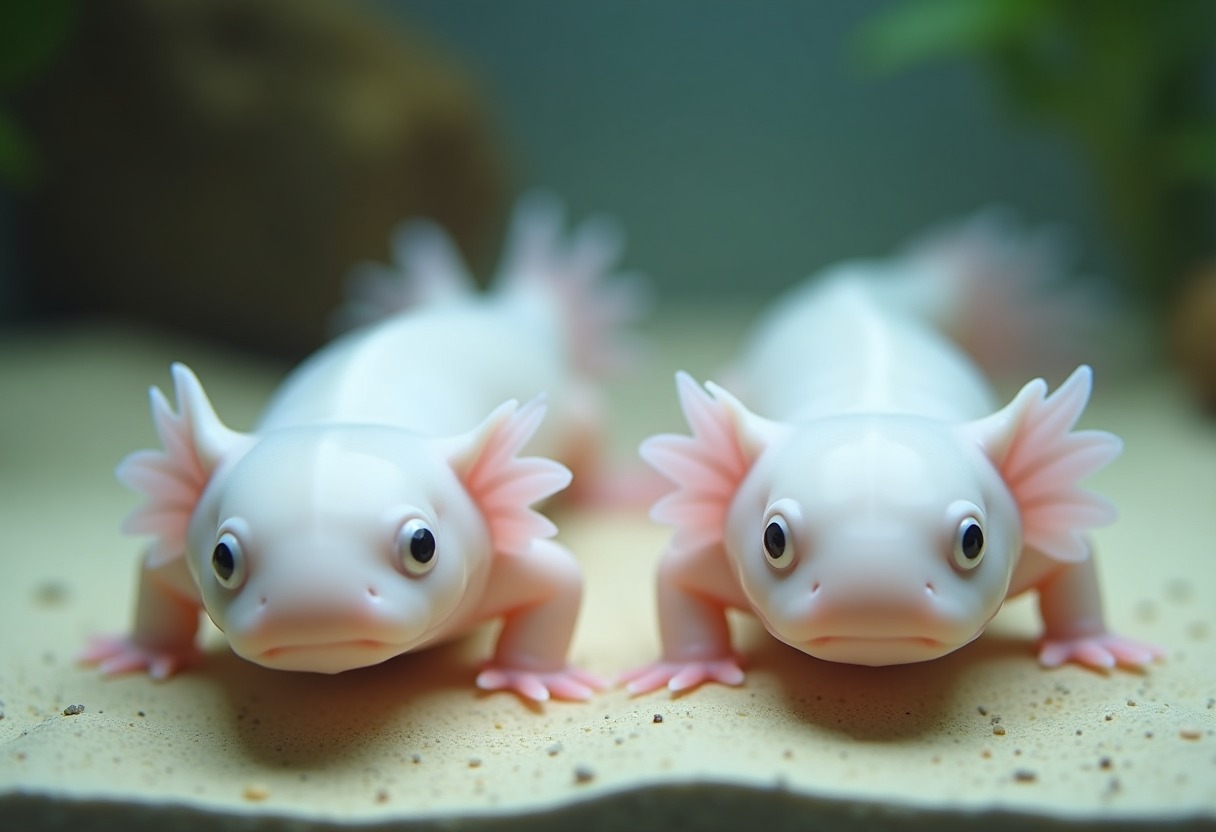
Sexing axolotls requires patience and observation — the physical differences between males and females aren't obvious until around 12-18 months of age, when sexual maturity begins. Before that point, external characteristics remain nearly identical, and even experienced keepers struggle to make accurate determinations.
The cloaca provides the most reliable sexing indicator once your axolotl reaches maturity. Males develop a noticeably swollen, bulbous cloaca that protrudes from the body, while females maintain a flatter, more streamlined appearance in the same area. Body shape, tail length, and behavioral patterns offer supporting clues, but the cloacal region remains your primary diagnostic tool.
When Axolotls Develop Visible Sex Characteristics
Sexual maturity in axolotls typically occurs between 12 and 24 months of age, though genetics, diet quality, and water temperature all influence this timeline. According to Caudata.org, axolotls kept in cooler water (60-64°F) may take longer to reach sexual maturity compared to those in warmer conditions, though warmer temperatures aren't recommended for long-term health.
Juvenile axolotls under 10-12 months show virtually no external dimorphism. The cloaca appears nearly identical in both sexes — a small, flush opening that doesn't protrude or swell. Even at 8-10 inches in length, before sexual maturity, reliable sexing remains nearly impossible through visual inspection alone.
Attempting to sex juveniles leads to misidentification more often than not. If you purchased your axolotl from a breeder who claimed to know the sex of a 4-6 month old, that determination was likely a guess. Sexual characteristics develop gradually, and definitive identification requires waiting until physical markers become unambiguous.
Growth rate affects the timeline. Axolotls fed high-protein diets following our Axolotl Feeding Guide may reach sexual maturity slightly earlier than those on restricted feeding schedules, though individual variation remains significant.
Primary Sexing Method: Cloaca Examination
The cloaca — the single posterior opening used for waste elimination and reproduction — provides the clearest sex indicator in mature axolotls. Males develop a pronounced cloacal swelling that becomes obvious when viewed from behind or below, while females maintain a relatively flat profile in the same region.
Male cloacal characteristics:
- Noticeably raised, bulbous swelling behind the hind legs
- Protrudes visibly from the body when viewed from the side
- Appears rounded and firm to the touch (though avoid handling unless necessary)
- Most prominent during breeding season, but visible year-round once mature
- Creates a distinct "bump" between the hind legs when viewed from above
Female cloacal characteristics:
- Flat or slightly raised, following the body contour
- No significant protrusion when viewed from the side
- Opening appears more slit-like than rounded
- Blends smoothly with the tail and body junction
- May show slight swelling when gravid (carrying eggs), but never as pronounced as males
Visual inspection works best when your axolotl positions itself near the glass or rests on a flat surface. Use a → Shop LED aquarium flashlight on Amazon to illuminate the underside without disturbing your axolotl excessively. The targeted light helps distinguish subtle elevation differences that overhead tank lighting might obscure.
For clearer observation, a → Shop aquarium magnifying glass on Amazon provides magnification without requiring you to remove your axolotl from water. These stick to the glass and let you examine anatomical details during routine observation.
Secondary Sex Characteristics and Body Differences
Beyond the cloaca, mature axolotls display subtle body proportions that support gender identification, though these markers prove less reliable on their own.
| Characteristic | Male | Female | Reliability | |---------------|------|--------|-------------| | Cloaca appearance | Swollen, bulbous, protruding | Flat, streamlined, minimal protrusion | Very High (primary indicator) | | Body shape | Slightly slimmer, more elongated | Fuller, rounder abdomen (especially when gravid) | Moderate (varies by individual) | | Tail length | Proportionally longer relative to body | Slightly shorter, stockier tail base | Low (significant overlap) | | Head width | Often narrower, more streamlined | May appear slightly broader | Low (morphology varies) |
Females carrying eggs develop an obviously swollen abdomen that distinguishes them immediately, but this only occurs during reproductive periods. A female not preparing to breed may appear as slim as a male of the same age and size.
Tail proportions show considerable individual variation and shouldn't be used as a sole determinant. Some males naturally have shorter tails while some females exhibit longer, more slender tails relative to body length. These differences become apparent only when comparing multiple axolotls side-by-side.
Head width differences are minimal and often influenced more by genetics and Axolotl Colors And Morphs than sex. Wild-type axolotls, for example, tend toward broader heads regardless of gender, while leucistic morphs often display more streamlined skull shapes in both sexes.
Photographing Your Axolotl for Accurate Sexing
Getting clear images of the cloacal region helps when seeking sexing confirmation from experienced keepers or veterinarians. The challenge: axolotls move constantly and rarely hold still in ideal positions.
Wait until your axolotl naturally positions itself against the glass or rests on a flat decoration. Rushing the process by handling your axolotl causes stress and produces lower-quality images than patient observation during normal activity. Reference our Safe Axolotl Handling Transport Moving Vet Visits guide if removal from the tank becomes necessary.
A → Shop clear plastic specimen container on Amazon provides a temporary viewing chamber if you absolutely must get definitive photos. Fill it with tank water, gently transfer your axolotl, and photograph from multiple angles. Keep this session under 2-3 minutes to minimize stress, and ensure the container is large enough for your axolotl to turn around comfortably.
Lighting makes or breaks sexing photos. Overhead tank lights create shadows that obscure cloacal details. Instead, position a → Shop aquarium photography light on Amazon at a 45-degree angle to eliminate shadows while providing clear definition of raised structures. White balance adjustments help too — phone cameras often auto-correct to bluish tones under LED lighting, which washes out anatomical details.
Capture images from three angles: directly behind (tail-on view), from below if your tank bottom allows it, and from the side at cloaca level. Multiple perspectives help experienced keepers confirm your determination or correct misidentifications.
What Most Guides Don't Tell You About Axolotl Sexing
Age estimations are often wrong. Pet store staff frequently underestimate axolotl age by months, which means the "6-month-old" you purchased may actually be 3-4 months old. This delays when you'll see reliable sex characteristics and explains why your "mature" axolotl still shows ambiguous features.
Temperature affects cloacal swelling prominence. Males kept in cooler water (60-62°F) per our Axolotl Temperature Requirements Chillers recommendations may show less dramatic cloacal swelling than those in warmer conditions, though the difference remains visible to trained eyes. The swelling becomes most pronounced during spring months when breeding hormones peak, even in captive non-breeding individuals.
Not all males develop equally obvious swelling. Roughly 10-15% of mature males show more modest cloacal development that can be mistaken for female anatomy by inexperienced observers. These males typically still exhibit the characteristic rounded shape rather than the flat female profile, but the difference proves subtle.
Females may briefly swell during hormone cycles. Even non-breeding females experience hormonal fluctuations that can cause temporary cloacal enlargement, though this never reaches the pronounced bulbous shape of males. The swelling subsides within 1-2 weeks and the flat profile returns.
If you're planning breeding, confirming sex before setting up your Axolotl Breeding Tank Setup prevents wasted effort and potential aggression between same-sex pairs. Breeding requires definitive sexing — assumptions lead to failed breeding attempts or unexpected egg masses when you thought you had two males.
Submersible cameras provide ongoing monitoring. A → Shop submersible aquarium camera on Amazon lets you review footage and capture stills during natural behavior without disturbing your axolotl. Mount it facing a common resting area and review recordings when cloacal views occur naturally.
Sexing difficulties shouldn't delay implementing proper care protocols. Whether male or female, all axolotls require the same water parameters detailed in our Axolotl Water Parameters Complete Guide, identical feeding schedules from our Best Axolotl Food Feeding Guide, and consistent maintenance following the Axolotl Tank Maintenance Schedule.
FAQ
Can you sex an axolotl before 12 months of age? Visual sexing before sexual maturity is unreliable and typically inaccurate. While some keepers claim success at 8-10 months, the external characteristics haven't developed enough to make confident determinations — you're essentially guessing based on minimal differences that may reverse as the animal matures.
Do male and female axolotls have different care requirements? No, both sexes require identical tank setups, water parameters, feeding schedules, and temperature control. The only care difference emerges if a female becomes gravid (egg-laden), at which point she may require a separate laying tank to prevent egg scattering throughout the main tank.
Will my axolotl's sex affect its behavior or aggression? Sex doesn't significantly impact temperament in solo-housed axolotls. Aggression issues stem from inadequate space, inappropriate tank mates, or stress factors covered in our Axolotl Tank Mistakes Stress Health guide — not gender.
Can veterinarians accurately sex juvenile axolotls? Even exotic veterinarians rely primarily on cloacal examination and can't definitively sex juveniles before external characteristics develop. Some may attempt internal palpation or imaging, but these methods risk stress and injury for minimal diagnostic benefit in healthy animals.
Does axolotl color morph affect sexing difficulty? Lighter morphs like leucistic and albino varieties make cloacal swelling easier to see against pale skin, while darker wild-types and melanoids require more careful examination under proper lighting. The anatomical differences remain identical across morphs — visibility is the only variable.
The Bottom Line on Axolotl Gender
Patience beats premature guessing when sexing axolotls — wait until 12-18 months and focus on cloacal shape rather than ambiguous body proportions.
Some links on this page are affiliate links. We may earn a small commission if you purchase through them, at no extra cost to you.
As an Amazon Associate we earn from qualifying purchases. This article contains affiliate links; if you buy through them we may earn a small commission at no additional cost to you.