 Axolotl Den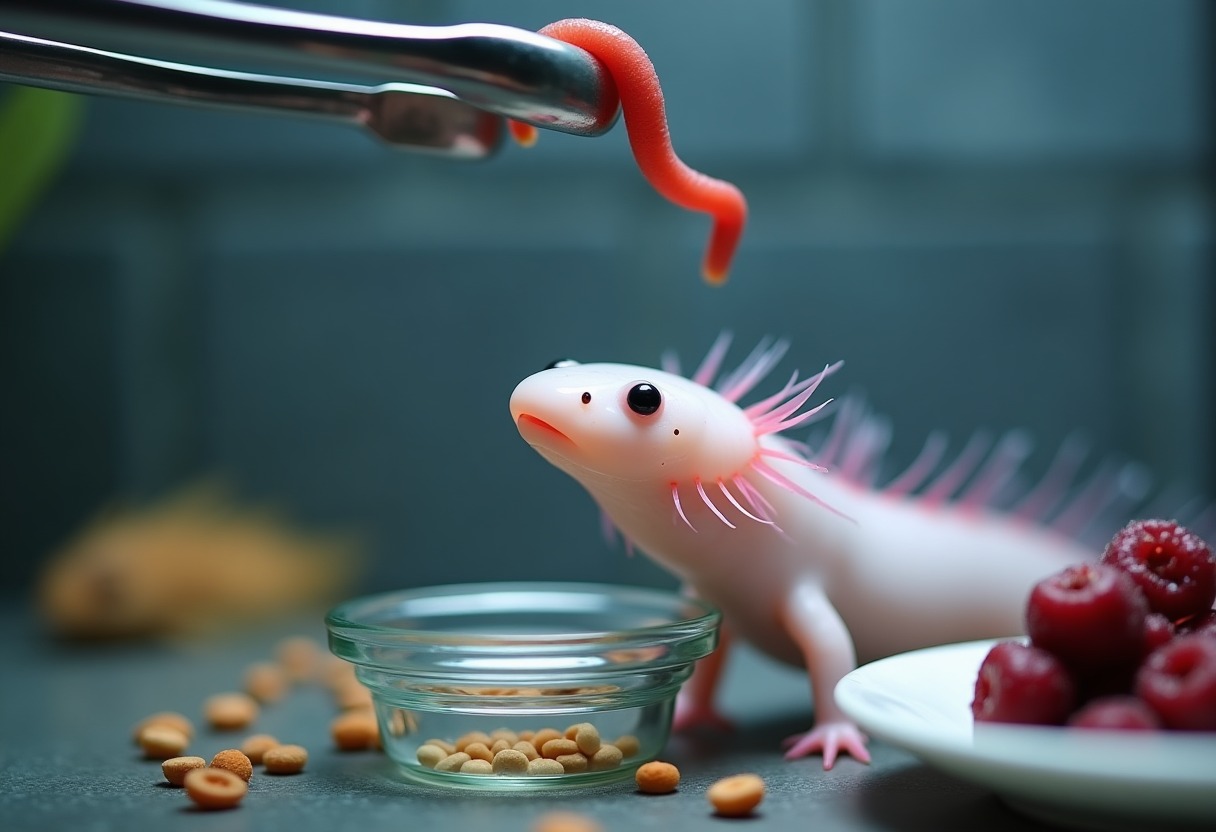
Your axolotl has been eating pellets without issue for months, but you've heard earthworms provide better nutrition and you're wondering if switching is worth the effort. The short answer: yes, but only if your axolotl is over 4 inches long and you're prepared to source quality live or frozen food consistently.
Why Some Axolotls Benefit From Live or Frozen Food
Pellets work well for juvenile axolotls and busy keepers who prioritize convenience. They're nutritionally complete, shelf-stable, and reduce water quality issues compared to messy protein sources. But adult axolotls often show improved gill health, brighter coloration, and more natural hunting behaviors on a varied diet that includes frozen bloodworms and live earthworms.
According to Caudata.org, earthworms provide a protein-to-fat ratio closer to what wild axolotls consume in their native habitat. Pellets typically contain 40-45% protein and 8-12% fat, while earthworms deliver 60-70% protein and only 5-8% fat. This matters if you're keeping breeding-age adults, where excess dietary fat can contribute to liver issues over time.
The transition makes the most sense when your axolotl reaches 5-6 inches in length, usually around 6-8 months old. Before that size, pellets are actually easier for them to digest and less likely to cause impaction compared to whole earthworms. If your axolotl is thriving on quality pellets like Hikari Sinking Carnivore Pellets or Rangen, there's no urgent need to switch unless you're breeding or notice declining appetite.
When You Should Skip the Transition
Three situations where pellets remain the better choice: axolotls under 4 inches, keepers who travel frequently, and tanks with aggressive feeding responses that make tong-feeding risky.
Young axolotls bite impulsively and often swallow substrate along with larger food items. Pellets minimize this risk and break down faster if accidentally ingested with sand. Once your axolotl consistently uses a feeding dish and ignores the tank bottom during meals, they're ready for whole prey items.
If you're away from home 3-4 days per week, frozen bloodworms require refrigeration and earthworms need regular maintenance. An automatic feeder can dispense pellets, but you can't automate live food. Pellets also maintain nutritional value for 6-12 months when stored properly, while frozen foods degrade in quality after 3-4 months even in a deep freezer.
Some axolotls snap so aggressively at feeding tongs that they risk damaging their jaw or gills. If your axolotl lunges at anything entering the tank, pellets dropped from above keep your pet safer during feeding time.
The Four-Week Transition Method
Week one focuses on acceptance, not nutrition. Offer one small earthworm piece (half-inch segment) or a pinch of frozen bloodworms alongside regular pellets. Use 12-inch stainless steel tongs to wiggle the food item near the axolotl's nose, mimicking live movement. Most axolotls ignore new food at first — they're wired to recognize familiar textures and scents.
Drop pellets immediately after the live food refusal. Your axolotl learns that refusing the new option still results in a meal, reducing stress. Repeat this sequence once daily for seven days. By day 5-6, most axolotls start mouthing the earthworm or bloodworms out of curiosity.
Week two increases the new food ratio to 50%. Offer earthworm segments first, wait 2-3 minutes for a response, then follow with half the normal pellet portion. Your axolotl should consume at least one earthworm piece per feeding session by day 10. If they're still completely refusing, the food size might be wrong — adult axolotls need earthworm pieces as thick as their head between the eyes.
Weeks three and four reverse the ratio. New food becomes the primary offering, with pellets serving as backup. By day 21, most axolotls accept earthworms or frozen food eagerly and pellets become unnecessary. Some keepers keep pellets as an occasional treat or for days when live food runs out.
One critical detail most guides miss: water temperature affects digestion speed. At 64°F, your axolotl digests an earthworm in 24-36 hours. At 68°F, that same worm processes in 18-24 hours. If you're seeing uneaten food or regurgitation during the transition, your water might be too warm. Check your temperature settings and reduce feeding frequency if needed.
Food Type Comparison
| Food Type | Protein Content | Convenience | Water Quality Impact | Cost (Monthly) | |-----------|----------------|-------------|---------------------|----------------| | Pellets | 40-45% | Highest — shelf-stable, pre-portioned | Minimal if uneaten pieces removed | $8-15 | | Frozen Bloodworms | 55-60% | Medium — requires freezer space, thaw time | Moderate — breaks apart easily | $15-25 | | Live Earthworms | 60-70% | Low — needs worm bedding maintenance | Low — consumed completely | $20-35 | | Frozen Brine Shrimp | 45-50% | Medium — requires freezer, nutritionally incomplete alone | Moderate — small particles | $10-20 |
The cost assumes feeding one adult axolotl 3-4 times weekly. Earthworms become cheaper if you culture your own nightcrawlers, dropping monthly expenses to $5-10 for bedding material. Pellets remain the most economical option for multi-axolotl tanks or keepers on tight budgets.
Water quality impact matters more than most keepers realize. A single earthworm eaten cleanly creates zero ammonia spike. Ten frozen bloodworms that scatter across the tank before your axolotl catches them will leach protein into the water column within hours. Our Axolotl Feeding Guide covers portion control in detail, but the core principle: whole food items beat small particles for maintaining stable parameters.
Essential Feeding Tools and Food Sources
Start with quality frozen bloodworms from Hikari or San Francisco Bay Brand. Cube-style packaging simplifies portioning — one cube contains 15-20 bloodworms, enough for 4-5 feedings for an adult axolotl. Thaw cubes in tank water, never tap water, to preserve nutritional value and avoid introducing chlorine.
→ Shop frozen bloodworms on Amazon
Live earthworms should come from reptile suppliers, not bait shops. Bait shop nightcrawlers often contain soil bacteria and parasites that stress axolotls. Uncle Jim's Worm Farm and Rainbow Mealworms ship nightcrawlers in clean bedding with care instructions. Store worms at 50-60°F in a ventilated container with moistened coconut coir.
→ Shop live earthworms on Amazon
Twelve-inch feeding tongs with rounded tips prevent accidental gill damage. Cheap tongs bend under an adult axolotl's bite force and can pinch gills if they slip. Stainless steel tongs from aquarium brands like Aquatic Arts or Hikari cost $8-12 and last years.
→ Shop axolotl feeding tongs on Amazon
A ceramic feeding dish helps contain frozen food and trains your axolotl to feed in one spot. This makes cleanup easier and reduces substrate ingestion. Look for shallow dishes 4-6 inches in diameter that won't trap your axolotl's legs.
→ Shop small feeding dishes on Amazon
Frozen brine shrimp work as supplemental nutrition but shouldn't replace earthworms or bloodworms. They lack the fat content axolotls need and scatter too easily during feeding. Use them as occasional variety, not staple food.
→ Shop frozen brine shrimp on Amazon
What Most Guides Get Wrong About Food Transitions
The biggest mistake: rushing the process because your axolotl "should" prefer live food naturally. Wild instinct doesn't override months of pellet conditioning. Captive-bred axolotls have never hunted live prey and don't automatically recognize earthworms as food. Some individuals take 6-8 weeks to fully transition, and that's completely normal.
Second mistake: offering too many food types simultaneously. Rotation feeding — earthworms Monday, bloodworms Wednesday, pellets Friday — confuses axolotls during transitions and makes it harder to identify which foods cause digestive issues. Stick with one new food type for the entire four-week period before introducing additional variety.
Temperature fluctuations during the transition cause more failures than food quality. If your tank swings from 62°F to 70°F between water changes, your axolotl's metabolism can't adjust to the new food's digestion requirements. Maintain stable temperatures within a 2-degree range throughout the transition period. Our guide on cooling your tank without a chiller covers techniques for temperature stability.
Gut-loading matters if you're feeding live earthworms. Worms kept in plain coconut coir for more than a week lose nutritional value. Feed your worms organic vegetables 24 hours before offering them to your axolotl — this loads their digestive tract with vitamins that transfer to your pet. Carrots, spinach, and sweet potato work well.
Finally, watch for subtle signs of protein overload: cloudy eye caps, excessive slime coat production, or lethargy after feeding. Earthworms deliver more protein per gram than pellets, so portion size needs adjustment. An adult axolotl eating two nightcrawlers every other day might need to drop to one nightcrawler per feeding to match their previous pellet calorie intake. If you notice symptoms similar to those in our Axolotl Diseases Symptoms Guide, reduce portion size before changing food types.
FAQ
How long can an axolotl go without eating during a food transition? Healthy adults tolerate 7-10 days without food without health consequences. If your axolotl refuses new food for more than five consecutive days, revert to pellets for three days, then restart the transition at a slower pace with smaller earthworm pieces.
Should I cut earthworms into smaller pieces for my axolotl? Axolotls over 6 inches can handle whole nightcrawlers, but cutting them into thirds or halves reduces choking risk and makes it easier to control portion sizes. Always cut worms on a clean surface and rinse pieces in dechlorinated water before feeding.
Can I mix frozen bloodworms with pellets in the same feeding? Yes, but offer bloodworms first using tongs, wait for your axolotl to consume them, then add pellets. Mixing both in a dish causes pellets to absorb moisture from the bloodworms and become mushy, which increases water quality issues.
My axolotl ate earthworms once then refused them for a week — what happened? This is normal exploration behavior, not true acceptance. The first consumption is often accidental or curiosity-driven. Continue offering earthworms daily as outlined in the transition method rather than assuming one successful feeding means the transition is complete.
Do different axolotl morphs prefer different food types? No scientific evidence supports morph-based food preferences. Albinos, leucistics, and wild-types covered in our Axolotl Colors And Morphs guide all respond to food transitions identically, though individual personality differences affect acceptance speed more than genetics.
The Transition Works When You Match Your Axolotl's Readiness
The right food transition happens when your axolotl's size, your schedule, and your food sourcing capability all align — force any of those three factors and you'll create more stress than benefit.
Some links on this page are affiliate links. We may earn a small commission if you purchase through them, at no extra cost to you.
As an Amazon Associate we earn from qualifying purchases. This article contains affiliate links; if you buy through them we may earn a small commission at no additional cost to you.