 Axolotl Den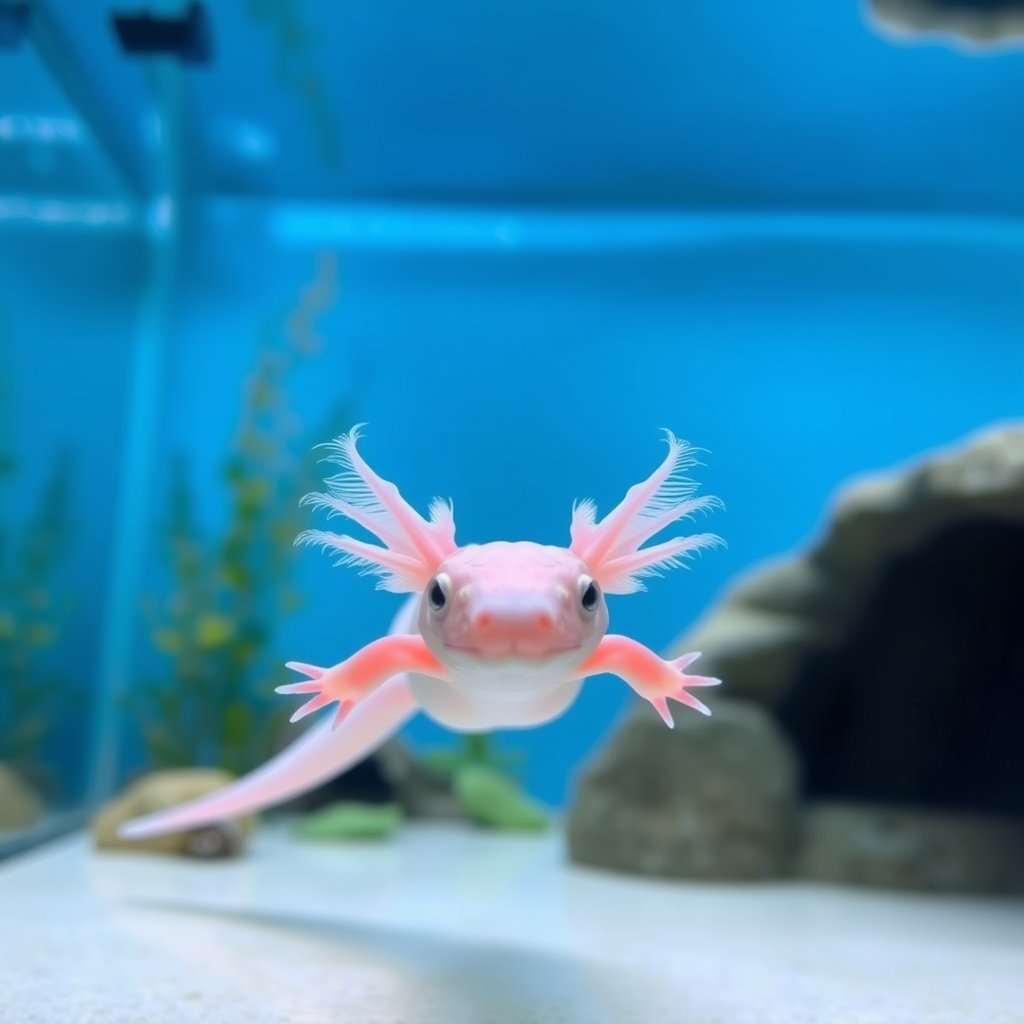
Stand in front of your tank and your axolotl swims toward the front glass, gill fronds flaring, mouth already gaping in anticipation. It is a genuinely charming moment, and it is easy to read it as recognition — the same way a dog trots to the door when it hears your car. The temptation to say "my axolotl knows me" is strong, and pet forums are full of owners who are absolutely convinced their pet loves them.
The truthful answer is more modest and, honestly, more interesting than the myth. Axolotls do form reliable, learned responses to the people who care for them. They can associate a person, a shadow, or a movement at the glass with the arrival of food, and they can develop routines that look uncannily like greeting behavior. What they almost certainly do not do is recognize you as an individual the way a mammal recognizes a familiar face and voice. Understanding that distinction will make you a better keeper and set your expectations where they belong.
Start With What an Axolotl Actually Is
To reason about axolotl recognition, you have to reason about the axolotl brain. Axolotls (Ambystoma mexicanum) are neotenic salamanders — amphibians that keep their larval, aquatic form for life instead of metamorphosing into land-dwelling adults. They breathe through external gills, they never leave the water, and their nervous system reflects that simple, aquatic existence.
Amphibian brains are small and comparatively unelaborated relative to the brains of birds and mammals. An axolotl has nothing resembling the large, folded cortex that mammals use for complex social recognition, memory of specific individuals, and emotional bonding. What it has is a lean set of neural circuits tuned for the essentials: detecting movement, hunting prey, avoiding threats, and responding to chemical and vibration cues in the water.
That matters. When people ask whether an axolotl "recognizes" them, they are usually importing a dog-or-cat model of recognition — a rich, affectionate, face-and-voice-based bond. An axolotl is not wired for that, and no amount of loving care will rewire it. This is not a knock on the animal. It is simply an honest description of a creature that has spent its evolutionary history as a lurking aquatic predator, not a social companion.
The Real Mechanism: Associative Learning
Here is where axolotls genuinely impress. They are capable of associative learning — forming a link between a cue and an outcome. This is the same basic mechanism behind a classic conditioned response: a signal reliably precedes food, and the animal learns to react to the signal.
For your axolotl, the cue is usually one or more of these:
- Movement at the front of the tank. Your silhouette approaching triggers an approach response because approach has, in the past, meant food.
- The tank lid opening or a light turning on. These reliably precede feeding and quickly become predictive signals.
- Vibration and water disturbance. Axolotls sense pressure and movement extremely well through their lateral line system, a row of sensory organs that detects water displacement.
Over days and weeks, these cues become tightly bound to feeding. The result is an axolotl that "comes to greet you." What is really happening is that a hungry, opportunistic predator has learned that a particular pattern of stimulation predicts a meal. That is real learning — it is just not the same as knowing your identity.
Why the distinction matters: a truly individual-recognizing animal would respond to you specifically and ignore a stranger. Most axolotls will happily beg at the glass for anyone who approaches, or for a hand-shadow, or even for a moving object that vaguely resembles a feeding routine. That generality is the tell. They are responding to the pattern, not the person.
But They Do Have Individual Temperaments
None of this means axolotls are identical little food-processing robots. Keepers who watch closely report clear differences in temperament between individuals, and those differences are worth taking seriously.
Some axolotls are bold and will approach the glass constantly. Others are shy, spending most of their time tucked into a cave or behind decor, and only emerging cautiously at feeding time. Some tolerate tank maintenance calmly; others dart and thrash. These individual differences are consistent enough over time that experienced keepers can describe their animals as "the pushy one" or "the nervous one" and be understood.
Temperament is shaped partly by genetics and partly by early experience and environment. A well-established, low-stress tank with plenty of hiding spots tends to produce calmer, more confident animals. A bright, exposed, crowded, or too-warm tank tends to produce skittish ones. So while your axolotl is not bonding with you emotionally, its personality is real, and the conditions you provide directly influence it.
If you want to encourage a bolder animal, give it security first. A tank with good cover — caves, dense planting, and shaded corners — paradoxically produces an axolotl that is more willing to come out in the open, because it always has an escape route. Our guide to safe axolotl tank decorations walks through hides and hardscape that add cover without risking impaction or injury.
→ Shop aquarium hides and caves on Amazon
As an Amazon Associate we earn from qualifying purchases.
Hand-Feeding: Where "Recognition" Feels Most Real
If any activity is going to make you feel like your axolotl knows you, it is hand-feeding. Offering worms with tongs or feeding by hand builds the strongest, most repeatable association between your presence and a reward, and many keepers find it the most rewarding part of the hobby.
Done carefully, hand-feeding has real benefits. It lets you monitor exactly how much each animal eats, it reduces waste and leftover food fouling the water, and it gives you a close, regular look at your pet's body condition, gills, and appetite — often the first place health problems show up. An axolotl that suddenly stops taking food from the tongs is telling you something.
A few practical notes so the association stays positive:
- Use feeding tongs, not bare fingers. Axolotls hunt by lunging at movement and cannot see well up close, so a wiggling worm near your fingers is an invitation to a surprisingly firm bite. Tongs keep your hands out of the strike zone and let you place food precisely.
- Feed on a routine. Consistency is what builds the learned response. Same rough time, same signal, same procedure.
- Match the food and portion to the animal. For a full breakdown of what and how much to offer at different life stages, see our complete axolotl feeding guide.
→ Shop axolotl feeding tongs on Amazon
Keep the interaction low-drama. Approach slowly, avoid casting sudden fast shadows, and let the animal come to the food rather than chasing it around the tank. Over time, a calm, predictable feeder produces a calm, confident axolotl that reliably shows up at the front glass — the closest thing to a "greeting" you are going to get, and genuinely nice to experience.
Enrichment for a Simple Brain
"Enrichment" for an axolotl looks very different from enrichment for a parrot or a dog. You are not teaching tricks. You are giving a simple aquatic predator an environment that lets it express natural behaviors — hunting, exploring, and hiding — without stress.
A few things genuinely enrich an axolotl's life:
- Structural complexity. Caves, tunnels, driftwood, and smooth stones give an axolotl places to patrol and hide. Varied terrain is more interesting than a bare glass box, and it supports the sense of security that produces a bolder animal.
- Live or moving food, occasionally. Because axolotls are triggered by movement, an occasional feeding that involves gentle motion (a worm wiggled with tongs) engages their hunting response in a way that dropped pellets do not.
- A stable, dim, cool environment. Axolotls are low-light, cool-water animals. Harsh lighting and warm water are stressors, not enrichment.
Keep decor axolotl-safe: nothing sharp, nothing small enough to be swallowed and cause impaction, and a soft or bare bottom rather than fine gravel. Again, the tank decoration guide covers the safety details.
→ Shop axolotl-safe tank decorations on Amazon
Stress, Temperature, and Why a Cool Tank Reads as a "Friendly" One
An axolotl that feels safe behaves very differently from one that feels threatened, and keepers often mistake a low-stress animal for an affectionate one. The single biggest driver of stress is water temperature. Axolotls are cool-water animals, and warm water pushes them toward stress, appetite loss, and illness. A tank that drifts too warm produces a withdrawn, off-food animal — the opposite of the confident "greeter" you want.
An inexpensive aquarium thermometer is one of the most useful tools you can own, precisely because it lets you catch temperature creep before it changes your animal's behavior or health. Watching the number is far more reliable than watching for symptoms.
→ Shop aquarium thermometers on Amazon
Other stress reducers — good water quality, ample hides, and gentle handling — all feed into the same outcome. A relaxed axolotl explores, eats readily, and shows up at the glass. A stressed one hides and refuses food. When people report that their axolotl "warmed up to them" over weeks, what usually happened is that the animal settled into a stable environment and its baseline stress dropped. That is a husbandry win worth celebrating; it is just not evidence of an emotional bond.
Setting Realistic Expectations vs a Dog or Cat
If you come to axolotls expecting a pet that loves you back, you will be disappointed, and that is worth saying plainly before someone buys one. An axolotl will not miss you when you travel, will not seek affection, and will not distinguish you from your houseguest. It cannot, because the neural hardware for that kind of individual recognition and social bonding is not there.
What you get instead is different, and for the right person, better:
- A visually striking, almost cartoonishly appealing animal that behaves like the miniature aquatic predator it is.
- A creature that reliably learns feeding routines and greets the arrival of food with real, visible enthusiasm.
- An individual with a genuine temperament — bold, shy, greedy, cautious — that you can get to know and accommodate.
- A low-interaction pet that thrives when you do less handling, not more.
That last point flips the usual pet script. With a dog, more interaction generally strengthens the bond. With an axolotl, restraint is a form of care. Handling is stressful and physically risky for an animal with delicate, unprotected skin and cartilaginous bones, so it should be minimized and done correctly when unavoidable — our guide to safe axolotl handling and transport covers when and how. The best relationship you can have with an axolotl is largely hands-off: a stable tank, a reliable feeding routine, and a lot of appreciative watching.
The Honest Bottom Line
Do axolotls recognize their owners? Not in the way we usually mean the word. They do not know your face, your voice, or you as an individual. What they do is learn — quickly and reliably — to associate cues like movement, light, and vibration with food, and they display consistent individual temperaments shaped by their genes and their environment.
That is not a lesser thing; it is just a different thing. If you provide a cool, stable, well-furnished tank and a predictable feeding routine, you will get an axolotl that comes to the glass, takes food from your tongs, and behaves like a confident, curious little predator. Read that behavior for what it truly is — smart associative learning in a simple, beautiful animal — and you will enjoy your axolotl more, not less.
For a broader picture of amphibian care and biology, the AmphibiaWeb database maintained by the University of California, Berkeley is an excellent, science-grounded starting point.
As an Amazon Associate we earn from qualifying purchases. This article contains affiliate links; if you buy through them we may earn a small commission at no additional cost to you.