 Axolotl Den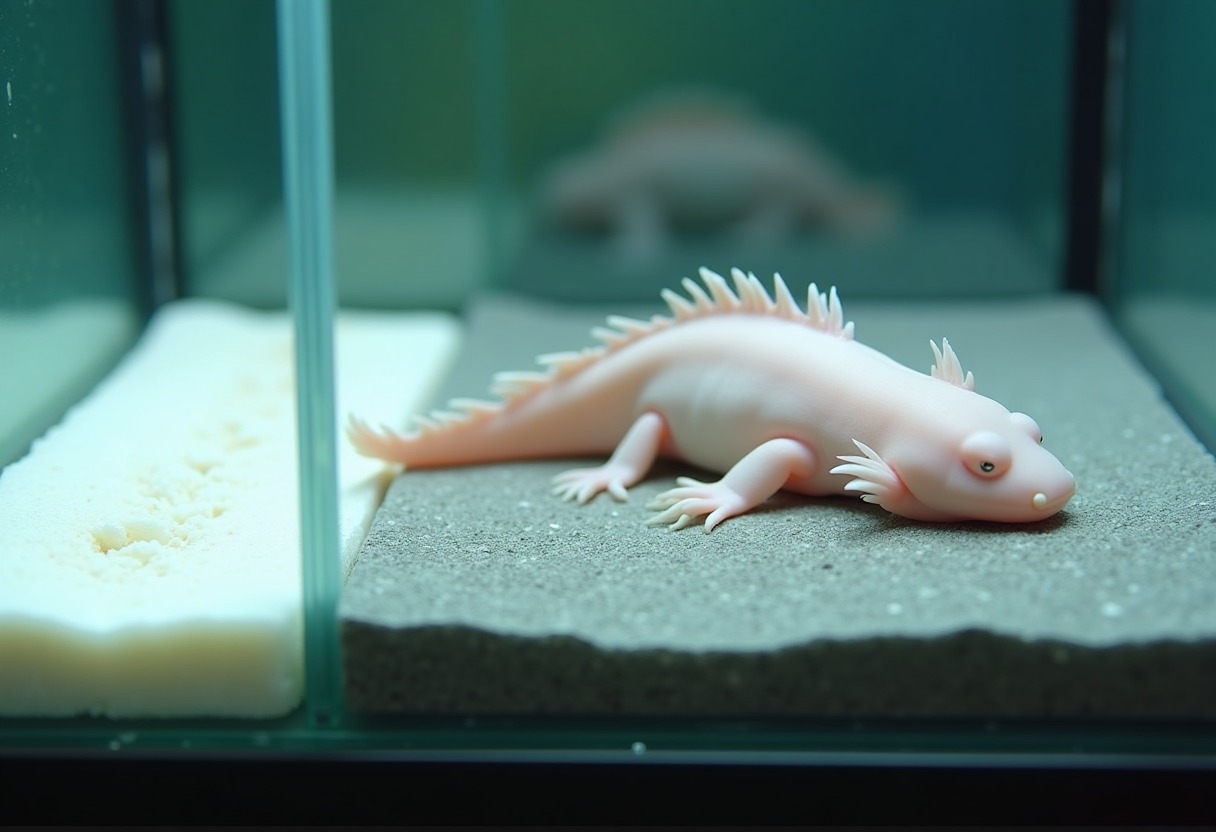
Your axolotl's substrate choice directly impacts their digestive health and stress levels. Choosing the wrong substrate can lead to impaction, torn gills, and bacterial infections that cost hundreds in veterinary bills.
Why Substrate Choice Matters for Axolotl Health
Axolotls exhibit suction feeding behavior, creating powerful negative pressure to pull food into their mouths. This feeding mechanism means they inevitably ingest substrate particles along with their meals. Axolotls lack stomach acid strong enough to dissolve many common aquarium substrates, making particle size and digestibility critical factors.
Gravel substrates between 2-5mm pose the highest impaction risk. These particles are too large to pass through the digestive tract but small enough for axolotls to accidentally consume. Clay-based substrates can expand in the digestive system, while sharp-edged materials damage delicate gill filaments during substrate exploration.
Substrate also affects beneficial bacteria colonies essential for nitrogen cycling. Smooth surfaces provide less surface area for bacterial attachment compared to porous materials, influencing your tank's biological filtration capacity as outlined in our Cycling Your Axolotl Tank guide.
Sand Substrates: The Natural Choice
Fine sand replicates the muddy lake bottom environment where wild axolotls thrive. Lake Xochimilco's substrate consists primarily of soft sediment that axolotls can safely ingest and pass through their digestive systems.
Sand particles smaller than 1mm pass harmlessly through an axolotl's digestive tract within 24-48 hours. Pool filter sand and children's play sand work excellently, provided they're thoroughly rinsed before tank addition. Avoid calcium carbonate sands like crushed coral, which alter water chemistry and can impact pH stability discussed in our Axolotl Water Parameters Complete Guide.
The primary sand disadvantage involves maintenance complexity. Waste settles into sand, requiring specialized cleaning techniques. Standard gravel vacuums can remove too much substrate, while gentle stirring releases trapped debris into the water column. Weekly substrate maintenance becomes essential to prevent anaerobic pockets that produce toxic hydrogen sulfide.
Sand provides excellent surface area for beneficial bacteria colonization, supporting robust biological filtration. Axolotls display more natural foraging behaviors on sand substrates, using their sensitive skin to detect food items buried in the substrate.
→ Shop fine grain aquarium sand on Amazon
Bare Bottom Tanks: Maximum Cleanliness
Bare bottom tanks eliminate impaction risks entirely while maximizing cleaning efficiency. Waste remains visible on glass surfaces, allowing immediate removal before bacterial decomposition begins. This setup works particularly well for quarantine situations covered in our Quarantine Tank Setup guide.
Maintenance becomes straightforward with bare bottom systems. Daily spot cleaning takes minutes, and complete substrate disruption never occurs during water changes. This approach suits keepers who prioritize water quality over natural aesthetics.
The major drawback involves reduced biological filtration surface area. Glass provides minimal space for beneficial bacteria compared to substrate materials. Keepers must compensate with additional filter media or more frequent water changes to maintain stable nitrogen cycles.
Bare bottom tanks can increase axolotl stress levels in some individuals. Without substrate for anchoring, axolotls may struggle to grip surfaces during feeding or movement. The stark appearance can cause shy axolotls to remain hidden, reducing natural exploration behaviors.
Ceramic Tiles: The Compromise Solution
Large ceramic tiles offer a middle ground between natural aesthetics and practical maintenance. Tiles provide grip surfaces for axolotl movement while remaining too large for accidental ingestion. Smooth, glazed tiles resist bacterial growth and clean easily with aquarium-safe brushes.
Unglazed ceramic tiles provide more surface texture for bacterial colonization while maintaining easy cleaning properties. Tiles measuring 6x6 inches or larger work best, creating minimal gaps where waste can accumulate. Darker colors help hide minor waste accumulation between cleanings.
Tile installation requires careful planning to prevent sharp edges or unstable placement. Smooth all tile edges before installation, and ensure tiles sit flush against tank bottoms to prevent axolotl injury. Some keepers use aquarium-safe silicone to secure tiles, though this makes future rearrangement difficult.
The aesthetic flexibility of tiles appeals to many keepers. Natural stone-look tiles create attractive underwater landscapes while maintaining practical cleaning advantages. This substrate choice works well in display tanks where visual appeal matters.
→ Shop ceramic tiles aquarium on Amazon
Substrate Comparison Matrix
| Feature | Sand | Bare Bottom | Ceramic Tiles | |---------|------|-------------|---------------| | Impaction Risk | Minimal (if fine) | None | None | | Maintenance Difficulty | High | Low | Medium | | Natural Behavior | Excellent | Poor | Good | | Biological Filtration | Excellent | Poor | Good | | Cost | Low ($10-20) | None | Medium ($30-60) | | Aesthetic Appeal | High | Low | High |
Product Recommendations for Each Substrate Type
For Sand Substrates: Pool filter sand provides the ideal particle size at economical prices. Quikrete Pool Filter Sand offers consistent 0.45-0.55mm particle diameter, perfect for axolotl safety. Rinse thoroughly until water runs clear before tank addition.
→ Shop aquarium sand substrate on Amazon
For Tile Substrates: Natural stone ceramic tiles in 12x12 inch sizes minimize gaps and provide stable surfaces. Choose glazed varieties for easiest cleaning, or unglazed for maximum bacterial surface area. Ensure all edges are smooth before installation.
Cleaning Equipment: Python-style siphon systems work best for sand substrate maintenance, allowing controlled debris removal without excessive substrate loss. For bare bottom and tile systems, standard aquarium vacuums handle cleaning efficiently.
→ Shop aquarium vacuum gravel cleaner on Amazon
Backup Options: Keep ceramic filter media or additional biomedia ready when using bare bottom setups. These provide extra surface area for beneficial bacteria, compensating for reduced substrate colonization space.
→ Shop ceramic aquarium substrate on Amazon
Advanced Substrate Considerations
Substrate depth affects both aesthetics and functionality. Sand substrates work best at 1-2 inch depths, providing foraging opportunities without creating anaerobic zones. Deeper sand beds require more intensive maintenance to prevent toxic gas buildup.
Mixed substrate approaches can work with careful planning. Some keepers use tiles in high-traffic feeding areas with sand in exploration zones. This hybrid method requires vigilant maintenance to prevent waste accumulation at substrate transitions.
Temperature considerations matter for substrate choice. Sand retains temperature more effectively than bare glass, helping maintain stable conditions discussed in our Axolotl Temperature Requirements Chillers guide. This thermal mass can benefit temperature-sensitive axolotls.
Consider your axolotl's specific needs when choosing substrate. Juveniles under 6 inches face higher impaction risks and may benefit from bare bottom setups until maturity. Adult axolotls typically handle fine sand substrates safely, while elderly or health-compromised individuals might need substrate-free environments.
Frequently Asked Questions
What sand is safest for axolotl tanks? Fine silica sand with particles smaller than 1mm works best for axolotl safety. Pool filter sand, children's play sand, and specialized aquarium sands all work well provided they're thoroughly rinsed before use. Avoid calcium-based sands like crushed coral or aragonite, which alter water chemistry and can impact pH stability. The key factor is particle size - anything small enough to pass through the digestive tract within 48 hours poses minimal impaction risk.
Can I use gravel instead of sand for my axolotl? Standard aquarium gravel poses serious impaction risks for axolotls and should never be used. Gravel particles between 2-5mm are particularly dangerous because they're too large to pass through the digestive system but small enough for axolotls to accidentally consume during feeding. Even larger river rocks can chip or break, creating dangerous fragments. Stick to fine sand, bare bottom, or large ceramic tiles that cannot be swallowed.
How often should I clean sand substrate in an axolotl tank? Sand substrates require weekly maintenance to prevent waste buildup and anaerobic bacterial growth. Gently stir the top layer during water changes to release trapped debris, then vacuum carefully to remove waste without losing excessive sand. Monthly deep cleaning involves more thorough substrate stirring and debris removal. Watch for dark spots or foul odors that indicate anaerobic pockets requiring immediate attention through increased cleaning frequency.
Do bare bottom tanks stress axolotls? Some axolotls experience increased stress in bare bottom environments due to the lack of grip surfaces and unnatural appearance. However, many axolotls adapt well to bare bottom setups, especially when provided with adequate hiding places covered in our Best Hides For Axolotls guide. Monitor your axolotl's behavior - excessive hiding, reduced appetite, or unusual swimming patterns may indicate substrate-related stress requiring environmental modifications.
Which substrate is easiest for beginner axolotl keepers? Bare bottom tanks offer the simplest maintenance for new keepers, eliminating impaction risks while making waste removal straightforward. However, fine sand substrates provide more natural behavior opportunities and aren't significantly more difficult with proper technique. Avoid ceramic tiles initially unless you're comfortable with installation and edge smoothing requirements. Start with your chosen substrate in a smaller tank to practice maintenance techniques before committing to larger setups.
The substrate foundation you choose shapes your axolotl's daily experience and long-term health outcomes.
Some links on this page are affiliate links. We may earn a small commission if you purchase through them, at no extra cost to you.
As an Amazon Associate we earn from qualifying purchases. This article contains affiliate links; if you buy through them we may earn a small commission at no additional cost to you.