 Axolotl Den
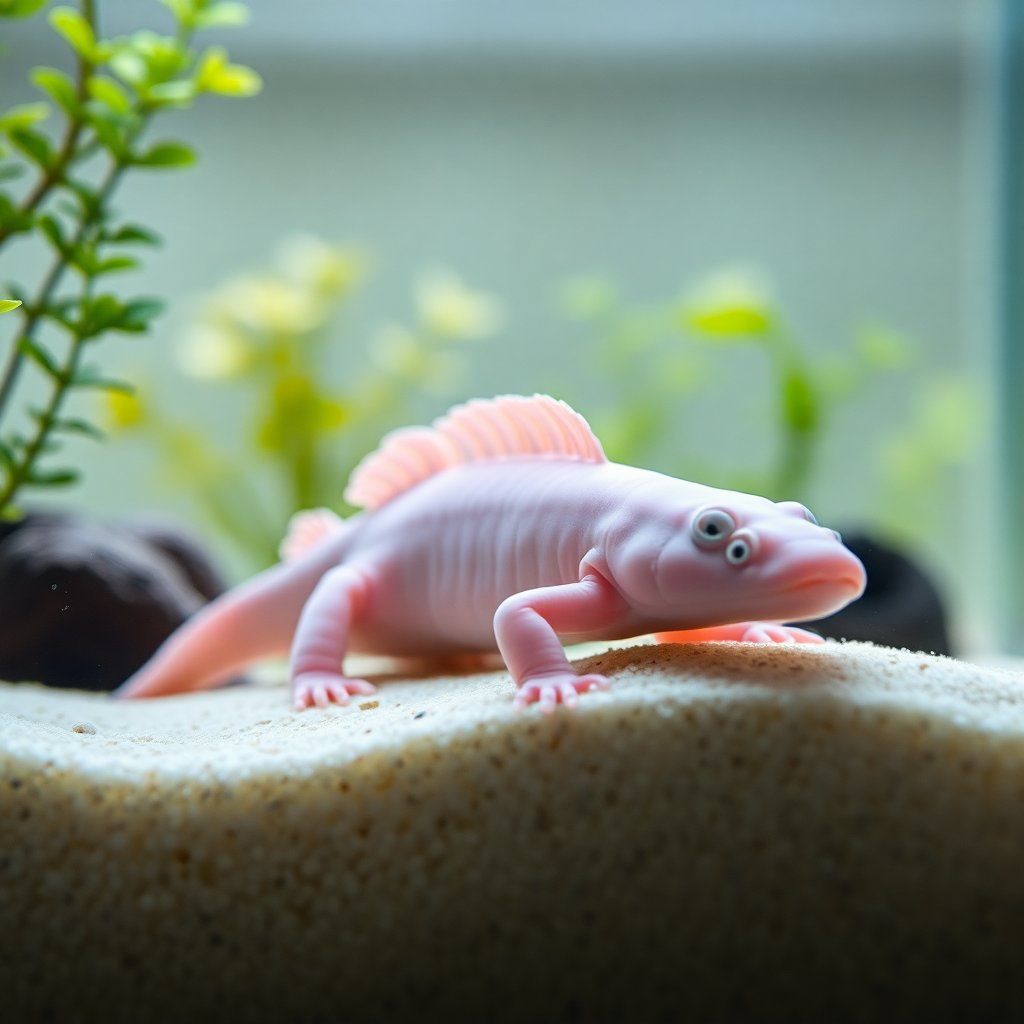
Tap water looks harmless. It is not. The same municipal treatment that makes it safe for you to drink makes it genuinely dangerous for an axolotl, and the fix is one of the cheapest, most important bottles you will ever buy for the hobby. A good water conditioner costs a few dollars, lasts months, and stands between your animal and a slow chemical burn across its gills.
Plenty of new keepers obsess over filters, chillers, and tank size while treating the dechlorinator as an afterthought. That gets the priorities backwards. You can run a beautiful setup and still lose an axolotl in an afternoon by topping off the tank with untreated faucet water. This guide walks through what these products actually do, which kind your water supply requires, how to dose correctly, and what to look for when you pick one.
This is general keeper-to-keeper information, not medical advice. If your axolotl looks unwell after a water change, contact an exotics vet who treats amphibians.
Why tap water is dangerous for axolotls
Municipal water utilities add disinfectants to kill bacteria in the pipes. The two you care about are chlorine and chloramine. Both are toxic to aquatic animals, and axolotls are especially vulnerable because their external gills — those feathery fronds behind the head — are thin, exposed, and constantly bathed in whatever is in the water.
Chlorine damages gill tissue on contact. An axolotl dropped into chlorinated water often shows distress fast: flared or reddened gills, frantic movement, gulping at the surface, or a gill-curl where the fronds fold forward against the head. According to the U.S. Environmental Protection Agency, many utilities have shifted from chlorine to chloramine because chloramine is more stable and lasts longer in the distribution system. That stability is exactly the problem for aquarists: chloramine does not gas off if you let water sit out overnight the way plain chlorine partly does.
The short version: you cannot assume your tap is safe, you cannot reliably fix it by letting a bucket stand, and you cannot see the difference by looking. You treat every drop of new water that touches the tank.
What a water conditioner actually does
A water conditioner — the terms "dechlorinator" and "conditioner" get used interchangeably — neutralizes these disinfectants almost instantly through a chemical reaction. The active ingredient in most products is sodium thiosulfate, which breaks the chlorine bond and renders it harmless.
Here is the catch that traps a lot of people: a plain dechlorinator removes chlorine but leaves behind ammonia. Chloramine is chlorine bonded to ammonia. When a conditioner splits that molecule, the chlorine is neutralized but the ammonia is freed into the water, and ammonia is its own serious toxin for axolotls. That is why the better conditioners are formulated to detoxify ammonia as well as remove chlorine and chloramine. If your utility uses chloramine — and a growing share do — a chlorine-only product is not enough on its own.
Good conditioners also bind heavy metals like copper that can leach from household plumbing, which adds another layer of protection for a sensitive amphibian.
Chlorine-only versus chloramine-ready: pick the right type
Start by finding out what your water supply uses. Your local water utility publishes an annual water quality report, usually online, that states whether they disinfect with chlorine or chloramine. A quick phone call to them works too. Knowing this one fact tells you which product to buy.
If your supply uses chloramine (or you are not sure), choose a conditioner that explicitly removes chloramine and detoxifies ammonia. These are the most common premium conditioners and the safest default. You can shop axolotl water conditioner for chloramine on Amazon and read the label for the words "chloramine" and "ammonia."
If your supply uses only chlorine, a basic dechlorinator is adequate, though a more complete conditioner does no harm and costs little more. Either way, for a cold-water animal with delicate gills, erring toward the more complete formula is the smart move.
A note on scope: you want a conditioner labeled for freshwater aquarium use. Axolotls are freshwater animals and do not belong in a salted or marine setup, so ignore any marine-specific products.
How much to dose (and why under-dosing is the real risk)
Dosing is simple arithmetic, but it is where tanks quietly go wrong. Every conditioner lists a dose per volume of water — commonly something like one capful treats a set number of gallons. Two rules keep you safe:
Dose for the volume of new water you are adding, at minimum. If you are doing a water change and replacing 5 gallons, dose at least for 5 gallons. Many keepers prefer to dose for the whole tank volume as a margin of safety, which is fine — these products have a wide safety window and mild overdosing is far less dangerous than under-dosing.
Treat the water before it touches the animal. The cleanest method is to condition your replacement water in a clean bucket first, let it mix for a minute, and then add it to the tank. If you must dose directly into the tank during a top-off, add the conditioner first and pour the new water in slowly near the flow of the filter so it disperses.
A simple dosing syringe or measuring set makes this foolproof, especially for small top-offs where a full capful would be too much. You can shop aquarium dosing syringes on Amazon to get an accurate pull for a few-gallon change. Precision matters more on small tanks than large ones, where a capful rounding error is a bigger fraction of the dose.
Under-dosing is the quiet killer because nothing looks wrong at first. The chlorine load simply is not fully neutralized, and the gill damage accumulates over repeated water changes rather than announcing itself in one dramatic event.
Does conditioned water need to sit before use?
With a modern conditioner, no. The neutralizing reaction is effectively immediate, so conditioned replacement water can go into the tank right away once it is mixed and temperature-matched. The old advice to "age" water for 24 hours comes from the pre-conditioner era and only partly addresses plain chlorine anyway — it does nothing for chloramine.
Temperature is the one thing worth pausing on. Axolotls are cold-water animals, and a sudden swing stresses them. Match your replacement water to the tank temperature before adding it. If you want the full picture on the numbers your tank should hold, our complete guide to axolotl water parameters covers temperature, pH, and the rest in one place.
A conditioner is not a substitute for cycling
This is the most important thing to understand, and it trips up beginners constantly. A water conditioner handles chlorine and chloramine from the tap. It does not replace a cycled tank's biological filter. Many ammonia-detoxifying conditioners only convert ammonia to a less harmful form temporarily — they buy you time, not a permanent fix.
The nitrogen cycle is what keeps ammonia and nitrite at zero day to day, and it lives in the beneficial bacteria colonizing your filter media. If your tank is not cycled, no bottle of conditioner will keep an axolotl safe. Walk through the process in our guide to cycling your axolotl tank before you ever add the animal, and keep a test kit on hand to confirm the numbers.
Think of it as a division of labor: the conditioner makes new tap water safe to add, the cycled filter keeps the standing water safe over time, and your test kit verifies both are working. You need all three.
How to choose: what matters on the label
When you are standing in front of a shelf or a product page, run down this short list:
Chloramine and ammonia. For most water supplies, confirm the product removes chloramine and detoxifies ammonia, not just chlorine. This single factor rules out the cheapest basic dechlorinators for chloramine users.
Freshwater-appropriate. Axolotls need plain fresh water. Avoid products that bundle in salt, slime-coat additives marketed for scaled fish, or marine buffers. A clean, simple conditioner is best for a sensitive amphibian.
Concentration and value. Concentrated formulas treat far more water per bottle, which matters when you are doing regular water changes on a tank for years. A small concentrated bottle usually outlasts a larger dilute one and costs less over its life. Compare the "treats X gallons" figure, not the bottle size. Browse and compare concentrated aquarium dechlorinators on Amazon to see the per-gallon math before you commit.
No unnecessary extras. Some conditioners add electrolytes, vitamins, or coloring agents. For axolotls, simpler is safer. You are buying chlorine and chloramine removal plus ammonia detox, nothing more.
Common water conditioner mistakes to avoid
Skipping it on "just a top-off." Evaporation top-offs feel minor, so people pour untreated tap water straight in. Even a cup of chlorinated water hits the gills. Treat every addition.
Trusting a standing bucket. Letting water sit out overnight does not reliably remove chlorine and does essentially nothing for chloramine. The bucket is for mixing conditioner and matching temperature, not for "aging" water.
Using a chlorine-only product on a chloramine supply. This is the sneakiest failure. The chlorine goes away, the freed ammonia does not, and the keeper has no idea the water change itself introduced a toxin.
Forgetting the conditioner points to a bigger gap. If you find yourself relying on an ammonia-detoxifying conditioner to keep readings down between water changes, the real issue is usually an uncycled or overstocked tank. Fix the cause, do not mask it. Our water parameters guide explains what healthy readings look like.
The bottom line
A water conditioner is the single cheapest insurance policy in the entire hobby. For most keepers the right choice is a concentrated, freshwater conditioner that removes both chlorine and chloramine and detoxifies ammonia, dosed for at least the volume of new water on every change and top-off. Confirm what your utility uses, dose accurately with a syringe on small changes, and never treat the bottle as a replacement for a properly cycled tank.
Get this one small thing right, consistently, and you remove one of the most common and most preventable causes of axolotl death. It is a few dollars and thirty seconds per water change, and it is the easiest win in axolotl keeping.
Disclosure: This article contains Amazon affiliate links. If you buy through them, Axolotl Den may earn a small commission at no extra cost to you, which helps support our care guides.
As an Amazon Associate we earn from qualifying purchases. This article contains affiliate links; if you buy through them we may earn a small commission at no additional cost to you.